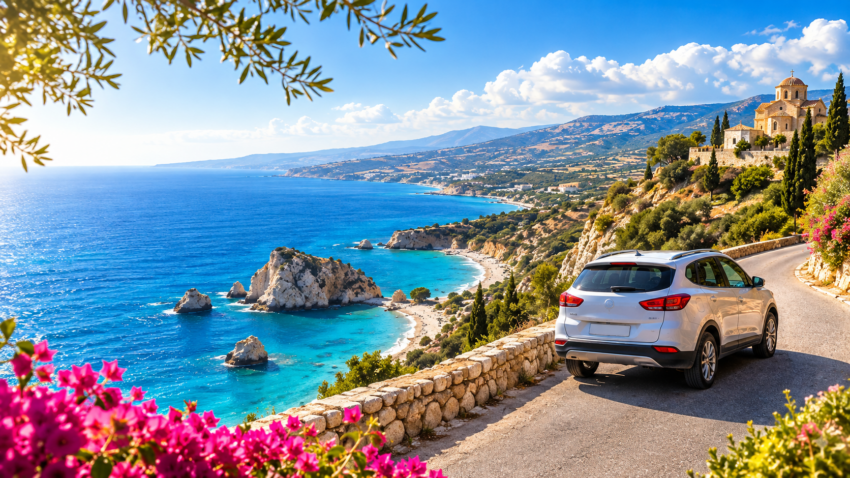
Cyprus may look small on a map, but its landscape changes dramatically from one region to another. Within a single journey, you can move from lively seaside promenades to pine-covered mountains, ancient archaeological sites, quiet wine villages and remote stretches of Mediterranean coastline.
A road trip is one of the most convenient ways to experience this variety. The main cities are connected by a good road network, while many beaches, villages and natural attractions are much easier to reach by car than by public transport. Cyprus’s official tourism portal also recommends driving as a practical way to explore its cultural routes and rural regions.
This seven-day Cyprus road trip begins and ends in Larnaca. It combines the island’s best-known cities with mountain scenery, historical monuments and coastal stops. Travellers who prefer a slower pace can easily extend it to nine or ten days.
| Day | Route | Main attractions |
|---|---|---|
| 1 | Larnaca | Finikoudes, Church of Saint Lazarus, Salt Lake |
| 2 | Larnaca – Cape Greco – Ayia Napa | Sea caves, nature trails, Konnos Bay |
| 3 | Ayia Napa – Nicosia | Venetian walls, old city, traditional streets |
| 4 | Nicosia – Troodos – Omodos | Mountain roads, villages, waterfalls, wineries |
| 5 | Omodos – Kourion – Limassol – Paphos | Archaeological sites, coastal views, Aphrodite’s Rock |
| 6 | Paphos | Archaeological Park, mosaics, harbour, Tombs of the Kings |
| 7 | Paphos – Akamas – Polis – Larnaca | Avakas Gorge, Baths of Aphrodite, Latchi |
Day 1: Discover Larnaca
Larnaca is a convenient starting point because it offers an international airport, an accessible city centre and several attractions close to one another. Instead of immediately leaving for another resort, spend the first day getting used to Cyprus and its relaxed rhythm.
Begin at Finikoudes, the city’s palm-lined waterfront promenade. It is a pleasant area for a morning walk, lunch overlooking the sea or an evening stop after collecting your car. From the promenade, walk towards the Church of Saint Lazarus, one of Larnaca’s most important religious landmarks.
Later, drive to Larnaca Salt Lake and the nearby Hala Sultan Tekke. The appearance of the lake changes with the seasons: it fills with water during the wetter months and is known for attracting flamingos in winter. The church, mosque, promenade, medieval castle and salt lake are all listed among the region’s principal attractions by Cyprus’s official tourism authority.
Spend the night in Larnaca so that you can begin the coastal drive east early the following morning.
Day 2: Cape Greco, Sea Caves and Ayia Napa
Leave Larnaca and travel east towards Cape Greco, stopping first around Ayia Napa or continuing directly to the national forest park.
Cape Greco lies between Ayia Napa and Protaras and offers one of the most attractive combinations of cliffs, clear water and walking trails in eastern Cyprus. Park near one of the designated viewpoints and explore part of the coastal path on foot. Popular stops include the sea caves, the small white chapel of Agioi Anargyroi and the natural bridge known as Kamara tou Koraka.
One of the marked routes through the park is the Aphrodite Trail, which connects coastal scenery with the area around Konnos Beach and the sea caves. The protected park is also part of the Natura 2000 network.
Continue to Konnos Bay for a swim or short rest. In the afternoon, explore Ayia Napa. Although the resort is famous for nightlife, it also has a small historic centre, a medieval monastery and an attractive harbour.
Stay overnight in Ayia Napa or Protaras. Protaras is generally better suited to a quieter evening, while Ayia Napa offers more restaurants and entertainment.
Day 3: Travel Inland to Nicosia
The third day takes you away from the coast and into Nicosia, the capital of Cyprus. This change of scenery is important: without an inland stop, it is easy to leave Cyprus thinking it consists only of beaches and resorts.
Park outside the historic centre and explore the old city on foot. Its most recognisable feature is the circular system of Venetian walls, constructed in the 16th century and reinforced by eleven heart-shaped bastions. Inside the walls, narrow streets lead past workshops, churches, museums, cafés and traditional houses.
Walk around Eleftheria Square and continue through the pedestrian areas of Ledra and Onasagorou streets. Nicosia combines its medieval urban structure with the atmosphere of a modern commercial capital, creating a noticeable contrast with the coastal resorts.
You can stay overnight in Nicosia or drive towards the lower foothills of the Troodos Mountains. Remaining in the capital makes the schedule more comfortable and allows time for dinner in the old town.
Day 4: Drive Through the Troodos Mountains
Leave Nicosia in the morning and head into the Troodos range. Temperatures in the mountains can be noticeably cooler than on the coast, so bring an extra layer even when the weather in Larnaca or Limassol feels hot.
The mountain roads are slower than the motorways, but the journey is part of the experience. Expect forested slopes, viewpoints, stone-built villages and small roadside cafés. The Troodos region provides a sharp contrast to Cyprus’s beaches and includes traditional communities, nature trails, Byzantine heritage and wine-producing areas.
Platres is a convenient stop for lunch or a short walk. Travellers interested in nature can visit one of the nearby waterfall trails, while those who prefer village life can continue towards Omodos.
Omodos sits approximately 800 metres above sea level in one of the best-known wine-producing parts of the Limassol district. Leave the car near the edge of the village and explore its cobbled lanes, traditional houses, local shops and central square on foot.
Spend the night in Omodos or another Troodos village. Staying in a traditional guesthouse adds a completely different dimension to the trip compared with spending every night at a coastal hotel.
Day 5: Kourion, Limassol and Aphrodite’s Rock
From Omodos, descend towards the southern coast and drive to Kourion. This archaeological site occupies an elevated position overlooking the Mediterranean and was once one of the most important city-kingdoms of ancient Cyprus.
The site includes a restored Greco-Roman theatre, mosaics and the remains of residential and public buildings. Allow sufficient time to walk around rather than treating it as a quick photo stop. Kourion is widely regarded as one of the island’s most impressive archaeological areas.
Continue to Limassol for lunch and a walk along the waterfront. The marina, promenade and old city can fill several hours, but travellers following a seven-day itinerary should avoid staying too long because the most scenic part of the day is still ahead.
Take the coastal route west towards Paphos and stop at Petra tou Romiou, commonly called Aphrodite’s Rock. According to mythology, this dramatic formation marks the place where Aphrodite emerged from the sea. The combination of cliffs, pale rocks and blue water makes it one of the most photographed stops on the island.
Arrive in Paphos before sunset and stay for two nights.
Day 6: Explore Ancient Paphos
Leave the car at your accommodation or near the harbour and dedicate the day to Paphos itself.
Start at the Archaeological Park of Kato Paphos. The wider UNESCO World Heritage property includes archaeological remains in Kato Paphos as well as the ancient sanctuary area around Kouklia. It is particularly known for Roman villas with detailed mosaic floors depicting mythological scenes.
After visiting the park, walk around Paphos Harbour and the medieval castle. Later, drive to the Tombs of the Kings, an extensive rock-cut necropolis that forms part of the UNESCO-listed property. Despite the name, the tombs were primarily associated with important officials and members of the local elite rather than actual kings.
End the day at a coastal restaurant or drive north towards Coral Bay for sunset. Keeping the same accommodation for two nights provides a welcome break from packing and changing hotels every morning.
Day 7: Akamas Peninsula, Polis and Latchi
Begin the final day by heading north from Paphos towards the Akamas Peninsula. The region contains some of western Cyprus’s most impressive natural scenery, including Avakas Gorge, Lara Beach, the Baths of Aphrodite and views across Chrysochous Bay.
Access conditions vary between locations, and some tracks are rough or unsuitable for an ordinary rental car. Check the rental agreement before leaving paved roads. A safer approach is to park near an official trailhead and continue on foot or book a local excursion for the more remote sections.
Continue to Polis and Latchi, where you can have lunch by the harbour. The area feels quieter and less developed than the southern resorts, making it an ideal final stop before returning to Larnaca.
The drive back is relatively long, so do not schedule a flight immediately after the Akamas visit. Travellers with an extra day should stay in Polis or Paphos and return to Larnaca the following morning.
Practical Tips for Driving in Cyprus
Traffic in Cyprus moves on the left. Road signs use international symbols, while distances and speed limits are displayed in kilometres. The official general limits are up to 100 km/h on motorways and 80 km/h on many other roads unless a lower limit is posted.
Choose an automatic car if you are not comfortable changing gears while driving on the left. A compact model is sufficient for the cities and paved mountain roads, but luggage space should also be considered.
Booking through Getmancar gives travellers the flexibility to build their own Cyprus itinerary, stop in smaller villages and change plans without depending on fixed excursion or bus schedules.
Fill the tank before entering remote mountain areas, avoid rushing on narrow village roads and plan to reach unfamiliar accommodation before dark. In summer, carry drinking water and avoid leaving valuables visible inside the vehicle.
A Road Trip That Shows the Real Cyprus
The greatest advantage of this route is its variety. Larnaca and Ayia Napa provide the seaside atmosphere many visitors expect, while Nicosia, Troodos and Omodos reveal a quieter and more traditional side of Cyprus. Kourion and Paphos introduce the island’s ancient history, and Akamas finishes the journey with open landscapes and a less-developed coastline.
Seven days are enough to see the main stops, but the route should not feel like a race. Leave space for an unexpected viewpoint, a village lunch or an afternoon swim. Those unplanned stops often become the most memorable parts of a Cyprus road trip.