
Table of Contents
- The Essence of the Cyprus Grape Harvest in Troodos
- Palouze and Soutzoukos: The Stars of the Festival
- Key Troodos Wine Villages and Their Festivals
- A One-Day Self-Drive Route from Limassol
- Cultural Highlights: Dancing, Crafts, and Local Flavours
- Planning Your Visit: Dates and Logistics
- Frequently Asked Questions About Troodos Grape Festivals
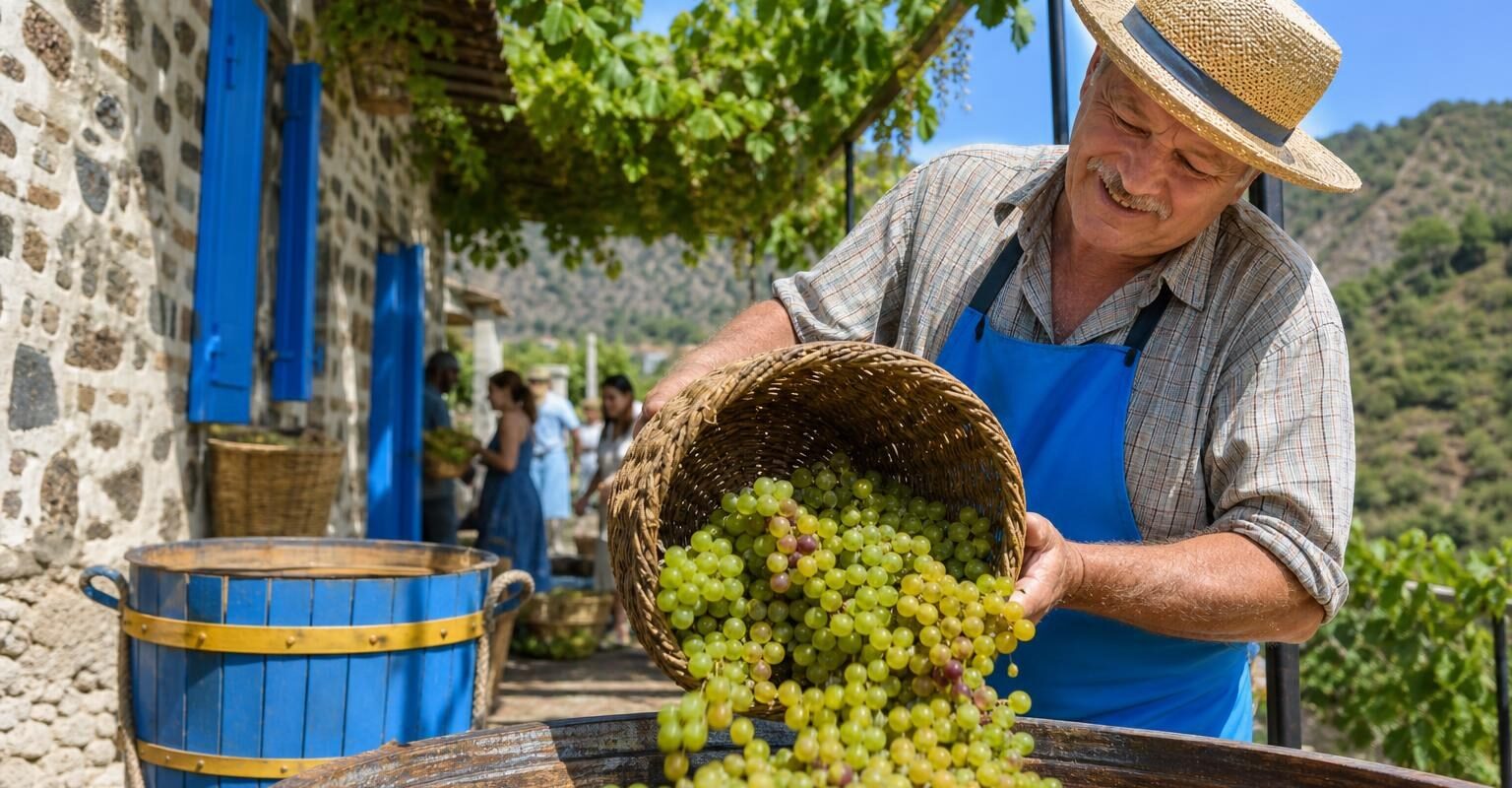
Every autumn, the mountain villages above Limassol come alive with the scent of boiling grape must, the rhythmic thud of wooden presses, and the sticky sweetness of freshly made palouze cooling on marble slabs. These grape harvest festivals are among the most rewarding reasons to drive into the Troodos foothills between late September and mid-October. If you’re renting a car in Cyprus this autumn, a self-drive loop through the wine villages offers a hands-on taste of traditions that have survived for centuries, and a chance to sample sweets you simply won’t find in coastal resort shops.
The Essence of the Cyprus Grape Harvest in Troodos
Cyprus has been producing wine for over 5,000 years, and the Troodos mountain range remains the island’s viticultural heartland. Indigenous grape varieties like Mavro and Xynisteri thrive at altitudes between 600 and 1,500 metres, where cooler nights preserve acidity and develop flavour in ways the lowland heat can’t match.
The harvest typically runs from mid-August through October, depending on altitude and variety. Village festivals mark the tail end of this period, celebrating the moment when freshly pressed grape juice, known as “mousto,” is transformed into traditional sweets, spirits, and wine. These aren’t staged tourist events. They’re community gatherings where grandmothers still oversee the cooking and children chase each other between the cauldrons.
Cypriot viticulture is facing its fourth consecutive year of production shortfalls, with drought and downy mildew cutting yields well below the industry benchmark of 13 to 16 million kilos. The 2026 harvest could drop to roughly 10.2 million kilos, making this year’s festivals feel especially significant. When production falls, the cultural rituals around the grape become more precious, not less.
The Cypriot government has recognised this, with officials stating that the character of rural and mountain communities is central to the island’s long-term tourism appeal and that Troodos has all the ingredients to meet growing demand for nature and outdoor experiences. For visitors, this translates into festivals that feel genuine rather than manufactured.
Palouze and Soutzoukos: The Stars of the Festival
Two grape-must sweets dominate every Troodos harvest festival, and understanding the difference between them is half the fun. Both begin with the same raw ingredient: freshly pressed, unfermented grape juice. But the end results are entirely different in texture, shape, and how they’re eaten.
The Traditional Art of Making Palouze
Palouze (sometimes spelled “palouzes” or “palouzé”) is a thick, jelly-like pudding made from grape must, flour, and sometimes a touch of rosewater. The process starts by filtering the fresh must through “asprogyri,” a specific white soil that removes impurities and bitterness. The clarified juice is then slowly heated in large copper cauldrons while flour is whisked in gradually to prevent lumps.
Stirring is constant and physical. It takes real arm strength to work the thickening mixture for 30 to 45 minutes over open flame. Once the palouze reaches a porridge-like consistency, it’s poured onto flat surfaces or into moulds and left to set. The finished product has a sweet, concentrated grape flavour with a texture somewhere between Turkish delight and a firm blancmange.
At festivals, you’ll see it served warm and freshly made, which is the best way to try it. Some villages sprinkle crushed almonds or sesame seeds on top. It’s nothing like anything you’ll find in a supermarket, and the taste of warm, just-set grape pudding straight from the cauldron is reason enough to make the drive.
Soutzoukos: The Iconic Grape Juice Sweet
Soutzoukos looks like a lumpy candle or a string of sausages, which explains its informal nickname, “Cypriot snickers.” It’s made by dipping strings of threaded almonds or walnuts repeatedly into the same grape-must-and-flour mixture used for palouze. Each dip adds another layer, and the strings are hung to dry between coats.
The result is a chewy, sweet coating around a crunchy nut centre. You’ll see soutzoukos hanging from wooden frames at every festival stall, and it keeps well for months when stored properly. It’s a common Christmas treat across Cyprus, but the freshest versions appear at harvest time. Buying a few strings directly from the maker is one of the best edible souvenirs you can carry home.
Tip: Ask vendors if their soutzoukos uses almonds or walnuts. Almond versions tend to be slightly sweeter, while walnut soutzoukos has a more earthy, bitter edge that pairs well with Commandaria wine.
Key Troodos Wine Villages and Their Festivals
The 2026 grape harvest season features coordinated festivals across several Troodos villages, with the Palouzes Festival in Arsos and Lofou scheduled for 27 September 2026, and the Afamia Festival in Koilani following on 4 October 2026. Dates can shift year to year, so always confirm before driving up.
Arsos and Vasa: Traditional Grape Pressing
Arsos is one of the larger wine villages on the southern slopes of Troodos, sitting at around 850 metres altitude. Its festival centres on open-air grape pressing using traditional stone “linos” presses. Visitors can roll up their trousers and stamp grapes in the old way, which is messier and more fun than it sounds.
Vasa Koilaniou, a short drive east, has a quieter atmosphere but equally strong winemaking roots. Several small family wineries open their doors during festival weekends, offering tastings of the current vintage alongside older reserves. The village square typically hosts cooking demonstrations where you can watch palouze being made from scratch.
Lofou and Koilani: Zivania Distillation and Folk Music
Lofou’s stone-built centre makes a striking backdrop for its festival activities, which lean towards craft demonstrations and folk music. You’ll often find basket weaving, pottery, and lace-making alongside the food stalls.
Koilani’s Afamia Festival on 4 October 2026 is the largest single-village event of the season. Zivania distillation takes centre stage here. Zivania is a clear grape spirit, typically 45 to 50 percent alcohol, distilled from the pomace left after pressing. Watching the copper stills in action is fascinating, and small samples are offered freely.
Important: Do not drink and drive. Zivania is extremely strong, and Cyprus enforces a strict blood-alcohol limit of 0.05 percent (0.02 percent for new drivers). If you plan to sample spirits or wine, designate a sober driver, arrange a taxi back to your accommodation, or book a room in one of the village guesthouses for the night.
| Village | Festival / Event | 2026 Date | Altitude | Key Attraction |
|---|---|---|---|---|
| Arsos | Palouzes Festival | 27 September | ~850 m | Grape pressing, palouze making |
| Lofou | Palouzes Festival | 27 September | ~780 m | Crafts, folk music |
| Koilani | Afamia Festival | 4 October | ~900 m | Zivania distillation, wine tasting |
| Vasa Koilaniou | Open wineries | Late Sept – Oct | ~800 m | Family winery visits |
| Omodos | Village celebrations | Varies | ~810 m | Monastery, wine museum |
Note: Dates are confirmed for 2026 at the time of writing. Check the Deputy Ministry of Tourism events calendar or village community boards for last-minute changes.
A One-Day Self-Drive Route from Limassol
A compact loop from Limassol covers the main festival villages in a single day, though staying overnight lets you enjoy the evening programmes without rushing.
Getting there by car:
- Start in Limassol and take the B8 north towards Platres.
- After about 20 km, turn left towards Koilani (signposted). The drive takes roughly 35 minutes on paved mountain roads.
- From Koilani, continue west to Vasa Koilaniou (4 km, 8 minutes).
- Head south-west to Lofou (7 km, 12 minutes). The road is narrow but fully paved.
- Drive north-east to Arsos (10 km, 15 minutes).
- From Arsos, you can either loop back to Limassol via the B8 (about 30 km, 40 minutes) or continue to Omodos (6 km, 10 minutes) before returning.
Total loop distance: approximately 75 to 85 km, depending on detours. All roads are paved and suitable for standard rental cars. Parking in the villages is informal: you’ll typically find spaces along the main road or in small lots near the church square. On festival days, arrive before 10:00 to secure a spot close to the centre.
Most rental agreements in Cyprus exclude off-road driving, so stick to the tarmac. The mountain roads have sharp bends and occasional loose gravel at the edges, but they’re well-maintained and perfectly manageable with a standard hatchback or small SUV.
Pro Tip: Fill your tank in Limassol before heading up. Petrol stations in the wine villages are scarce, and the few that exist may close early on weekends and festival days.
Cultural Highlights: Dancing, Crafts, and Local Flavours
The food and sweets draw visitors in, but the cultural programme surrounding each festival deserves equal attention. Most villages organise live music from mid-morning, with local bands playing traditional Cypriot folk songs on violin, lute, and tambourine. Spontaneous circle dancing often breaks out in the village square by early afternoon, and visitors are always welcome to join.
Craft stalls vary by village, but common offerings include handmade lace from Lefkara-trained artisans, carved olive wood utensils, and locally pressed olive oil. Koilani in particular has a reputation for its halloumi-making demonstrations, where you can watch the cheese being shaped and brined on the spot.
Food beyond the grape sweets is plentiful. Expect souvlaki, loukaniko (pork sausages with coriander seed), fresh bread baked in outdoor wood ovens, and seasonal fruit. Prices at festival stalls are generally modest: a plate of souvlaki or a portion of palouze typically costs a few euros, though exact prices vary and should be checked on the day.
For families, several villages set up children’s activities including grape-stomping pits, face painting, and donkey rides. The atmosphere is relaxed and welcoming, and English is widely spoken by younger villagers and stall holders.
Planning Your Visit: Dates and Logistics
Where to Find the Official Event Calendar
The most reliable source for confirmed dates is the Deputy Ministry of Tourism’s official events page, which lists festivals by region and month. Village community Facebook pages are another good resource, often posting updates in both Greek and English. The Limassol Tourism Board also publishes a seasonal events listing that covers the Troodos wine villages.
Don’t rely solely on dates published months in advance. Weather, harvest timing, and local logistics can push a festival forward or back by a week. A quick phone call to the village community council (koinotita) the week before your planned visit is the surest way to confirm.
Essential Tips for Cyprus Village Festivals in October
- Wear comfortable shoes with grip. Village streets are cobblestone, and grape juice makes surfaces slippery.
- Bring layers. Troodos villages at 800 to 900 metres can be 8 to 10°C cooler than the coast. October mornings often start around 14 to 16°C in the mountains, warming to the low twenties by midday.
- Carry cash. Many stalls and small vendors don’t accept cards.
- Sun protection still matters. October sun at altitude is deceptive, and you can burn quickly.
- Bring reusable bags or containers. Soutzoukos and palouze are best transported in something sturdy.
Weather Alert: October rainfall in the Troodos foothills averages around 30 to 40 mm, and sudden showers can roll in by afternoon. A light waterproof jacket is worth packing even on clear mornings.
Frequently Asked Questions About Troodos Grape Festivals
What exactly is palouze, and how does it taste?
It’s a thick grape-must pudding made from fresh juice, flour, and sometimes rosewater. The texture is similar to a firm jelly or blancmange, with a deep, concentrated grape sweetness. At festivals, it’s served warm from the cauldron, which is the best way to experience it.
Are the Troodos grape festivals free to attend?
Yes, entry to the village festivals is free. You pay only for food, drinks, and any crafts or products you buy from stalls. Parking is also free, though spaces fill quickly on festival mornings.
Can I visit multiple villages in one day?
Absolutely. The wine villages are close together, and a self-drive loop from Limassol covers four or five villages in a comfortable day. If you want to sample zivania or wine, plan to have a designated sober driver or book accommodation in one of the villages.
Do I need a 4×4 to reach the festival villages?
No. All the main wine villages (Arsos, Lofou, Koilani, Vasa, Omodos) are connected by paved roads suitable for any standard rental car. Avoid unpaved forest tracks, as most rental agreements don’t cover off-road driving.
When is the best time to go: late September or early October?
Both work well. The Palouzes Festival on 27 September 2026 and the Afamia Festival on 4 October 2026 are the headline events. Visiting on a festival day guarantees the full experience, but even on non-festival weekends, several village wineries and workshops remain open for tastings and demonstrations throughout October.
The Troodos grape harvest festivals are one of the most genuine cultural experiences Cyprus offers. They’re small-scale, community-run, and rooted in traditions that long predate the tourist industry. A rented car and a free Saturday are all you need to reach them. Drive up early, eat warm palouze from a copper pot, buy a string of soutzoukos for the journey home, and stay sober behind the wheel. That’s a proper autumn day in Cyprus.