
Table of Contents
- An Introduction to Traditional Food in Cyprus
- What is Cyprus Meze and How Does it Work?
- The Pillars of Cypriot Meat: Souvla and Souvlaki
- Slow-Cooked Classics: Kleftiko, Afelia and Stifado
- Traditional Oven Dishes and Savoury Bites
- Cypriot Food Summary Table
- Sweet Treats: Loukoumades and Glyko tou Koutaliou
- Seasonal Specialities and Winter Festive Foods
- Where to Eat: Finding Authentic Village Tavernas
- Getting There by Car
- A Note on Drinking and Driving in Cyprus
- Frequently Asked Questions About Cypriot Food
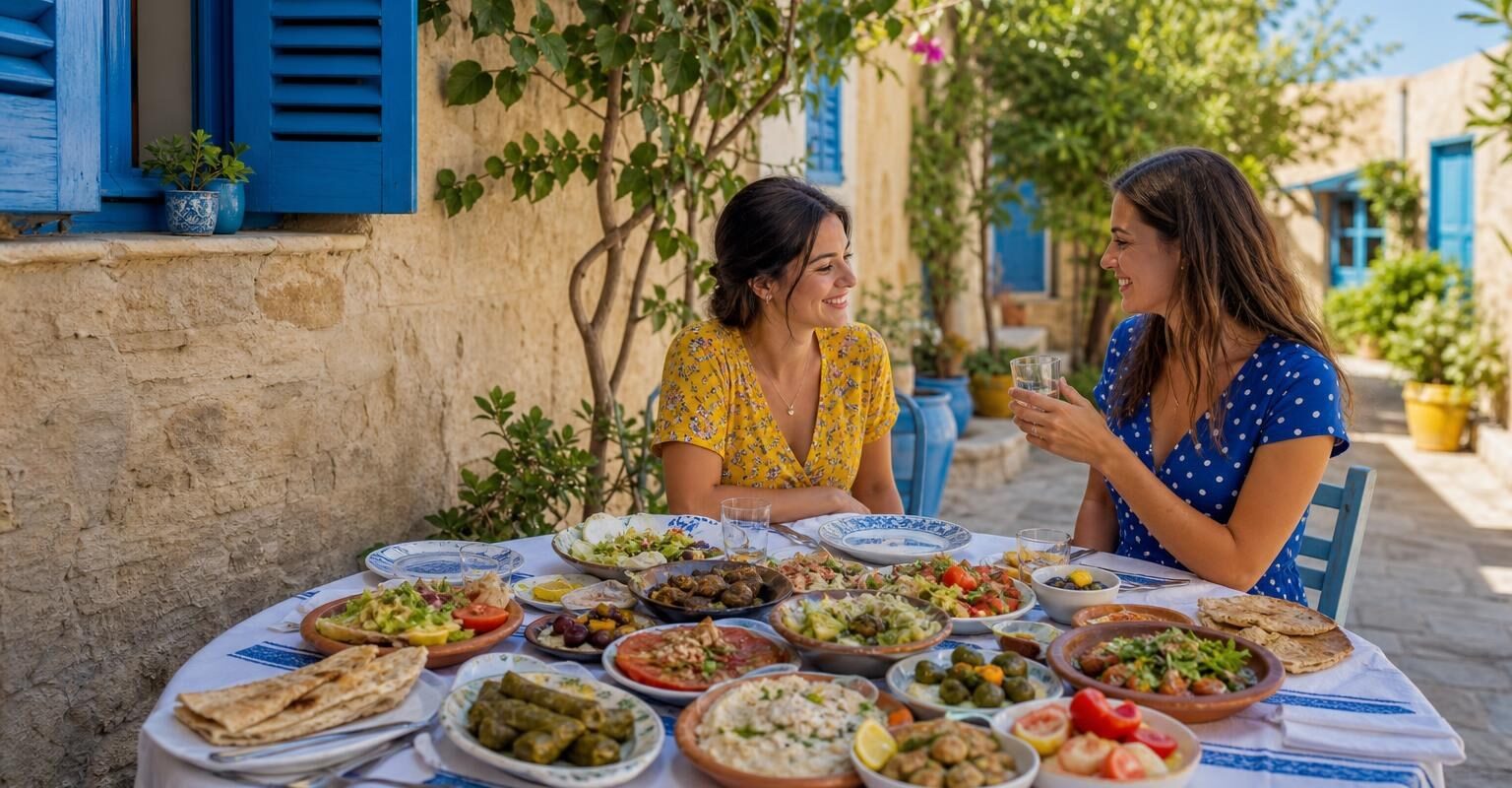
Cypriot food is a mix of Greek, Turkish and Middle Eastern cooking, built around grilled meats, slow-baked lamb, fresh vegetables, pulses and halloumi. The quickest way to try most of it is a village taverna meze, where a long run of small plates gives you a tour of the island’s kitchen in one sitting.
This guide covers 15 dishes worth ordering, what each one is, and when and where it tastes best. You’ll also find a summary table, advice on finding genuine tavernas, and a sample drive from Limassol to the hills.
Many of the best meals in Cyprus are inland, away from the resort strips. A car makes those trips much easier, especially for a long Sunday lunch in a mountain village where buses run rarely or not at all.
The dishes below are the ones locals actually eat. Some appear on every tourist menu, while others turn up mainly in winter or at family celebrations. Knowing the difference helps you order well and avoid the reheated versions served to passing coach parties.
An Introduction to Traditional Food in Cyprus
Cyprus sits at a crossroads between Europe, Anatolia and the Levant. Its cooking reflects that: Greek techniques, Turkish grilling traditions and Middle Eastern spices such as cumin and coriander all appear on the same table.
One writer describes it neatly as one cuisine with two vocabularies. Greek and Turkish Cypriots cook the same vegetables, cheeses and slow-roasted lamb, and many dishes appear on both sides of the Green Line under different names.
Two things define island eating more than anything else:
- Meze: a long sequence of small shared plates that turns dinner into an evening
- Souvla: large chunks of meat turned slowly over charcoal, the centrepiece of Sunday gatherings
- Halloumi, olive oil and lemon: the background flavours that run through almost everything
- Seasonal produce: artichokes in spring, figs and watermelon in summer, pulses and stews in winter
Portions are generous and meals are social. Locals also eat later than many visitors expect, with dinner typically peaking between 20:30 and 21:30, so a 19:00 booking may leave you dining in an empty room.
What is Cyprus Meze and How Does it Work?
Meze is not a single dish but a format. You order “meze for two” (or four, or six), and the kitchen sends out a sequence of small plates, often 15 to 25 and sometimes as many as 30, over two or three hours.
The order follows a fairly fixed pattern:
- Dips and bread: tahini, talattouri (the local tzatziki), taramosalata and hummus with warm pitta
- Salads and raw vegetables: village salad, olives, pickled caper leaves
- Cheese and cold bites: grilled halloumi, lountza (smoked pork loin)
- Hot vegetable and pulse dishes: koupepia, mushrooms, fried courgettes with egg
- Light meats: sheftalia, loukanika sausages, keftedes (meatballs)
- The main grill: souvla, souvlaki, sometimes kleftiko or afelia
- Fruit or a small sweet: often on the house
As a guide, a traditional meze dinner usually costs around €20 to €30 per person in 2026, often including one drink. Prices vary by region and change often, so check the menu before ordering.
Pro Tip: Pace yourself. The first wave of dips and bread fills people up fast, and the best grilled meats arrive last. Eat a little of everything rather than a lot of the early plates.
Fish meze follows the same idea, with octopus, calamari and whole grilled fish replacing the meat courses.
The Pillars of Cypriot Meat: Souvla and Souvlaki
Souvla and souvlaki sound similar, but they’re quite different on the plate.
Souvla uses big chunks of lamb, pork or chicken, threaded onto long skewers and turned slowly over charcoal for an hour or more. The result is crisp outside and juicy inside, and it’s the standard Sunday meal for Cypriot families with a rotisserie in the garden.
Souvlaki uses small cubes of meat, usually pork, on short skewers that cook in minutes. It’s served in pitta with salad, onion and lemon, making it the island’s favourite quick meal.
Sheftalia is the essential side to both. These are small sausages of minced pork and lamb with onion and parsley, wrapped in caul fat that melts away on the grill. Ask for a “mixed pitta” and you’ll usually get souvlaki and sheftalia together.
| Souvla | Souvlaki | |
|---|---|---|
| Meat size | Large chunks | Small cubes |
| Cooking time | 1-2 hours | 10-15 minutes |
| Typical setting | Sunday lunch, taverna, family gatherings | Grill shops, takeaways |
| Best side | Sheftalia, salad, potatoes | Sheftalia in pitta |
Slow-Cooked Classics: Kleftiko, Afelia and Stifado
These three dishes are worth seeking out, and each one rewards a cook who takes their time.
Kleftiko is lamb (sometimes goat) seasoned with oregano and bay, sealed and baked in a clay oven for roughly 6 to 8 hours until it falls off the bone. The name links to the “klephts”, bandits said to have cooked meat in sealed pits so the smoke wouldn’t give them away.
Proper kleftiko needs advance preparation, so many tavernas sell out by mid-afternoon or only cook it on certain days. Ring ahead if it’s the main reason for your trip.
Afelia is pork marinated in red wine, then cooked with crushed coriander seeds. It’s earthy and slightly sharp, and usually comes with bulgur wheat or potatoes.
Stifado is a rich beef stew (sometimes rabbit) slow-cooked with lots of small whole onions, red wine, vinegar and cinnamon. It’s heavier than the other two and best on a cool evening.
Traditional Oven Dishes and Savoury Bites
Home cooking in Cyprus leans on the oven and the stockpot. These dishes are common in family kitchens and good village tavernas.
- Makaronia tou fournou: a pasta bake with minced meat and béchamel, finished with grated halloumi. Think of a richer local cousin of pastitsio, popular at gatherings and Sunday lunches.
- Koupepia: vine leaves stuffed with rice, minced meat, tomato and herbs, then simmered gently. Vegetarian versions skip the meat.
- Louvana: a thick yellow split-pea soup with onion, olive oil and lemon. It’s cheap, filling and a staple during Lent and the colder months.
It’s worth looking past the obvious menu items too. One local guide suggests that if you order the kolokasi, the louvi and the trahana, you’ll eat better than the next table. Kolokasi is a taro root stew, louvi is black-eyed beans with greens, and trahana is a soup of dried cracked wheat and yoghurt.
Halloumi: The National Cheese of Cyprus
Halloumi shows up everywhere: grilled at breakfast, cubed in salads, grated over pasta and served with watermelon in summer. Its high melting point means it holds its shape on a grill.
Traditional halloumi is made from sheep’s and goat’s milk, often folded with mint, and holds EU protected status. For its history and where to buy the best, see our dedicated halloumi guide.
Cypriot Food Summary Table
This table brings together all 15 dishes so you can plan what to order and where.
| Dish | Type | Vegetarian? | Best place to try it |
|---|---|---|---|
| Meze | Mixed sequence | Veg versions on request | Village taverna, evening |
| Souvla | Meat | No | Village taverna, Sunday lunch |
| Souvlaki | Meat | No | Local grill house |
| Sheftalia | Meat | No | Grill house or meze |
| Kleftiko | Meat | No | Mountain village taverna |
| Afelia | Meat | No | Traditional taverna |
| Stifado | Meat | No | Taverna in winter |
| Makaronia tou fournou | Meat (baked pasta) | No | Family-run taverna |
| Koupepia | Meat or veg | Sometimes | Meze or home-style taverna |
| Louvana | Veg (soup) | Yes | Winter, Lent menus |
| Halloumi | Cheese | Usually* | Anywhere, best grilled fresh |
| Kolokasi | Veg/meat stew | Sometimes | Village taverna, winter |
| Trahana | Soup | Yes | Winter, mountain villages |
| Loukoumades | Dessert | Yes | Festivals, bakeries |
| Glyko tou koutaliou | Dessert | Yes | Village homes, cafés |
*Traditional halloumi often uses animal rennet. Strict vegetarians should check the label.
Sweet Treats: Loukoumades and Glyko tou Koutaliou
Loukoumades are small balls of fried dough, crisp outside and airy inside, soaked in honey or syrup and often sprinkled with cinnamon. You’ll find them at bakeries, festivals and church fairs, usually served hot in a paper cup.
Glyko tou koutaliou means “spoon sweet”. These are whole fruits, nuts or even vegetables preserved in thick syrup: green walnuts, figs, cherries, bergamot peel, baby aubergines.
Spoon sweets are central to Cypriot hospitality. Visit someone’s home in a village and you may be offered a single spoonful on a small plate with a glass of cold water and a coffee. Accept it: refusing can seem impolite, and eating it and finishing the water is the custom.
Note: Village shops and monastery stalls often sell jars of spoon sweets. They make good gifts, but pack them carefully in checked luggage.
Seasonal Specialities and Winter Festive Foods
Cypriot food changes noticeably with the seasons. Summer menus lean towards salads, grilled fish and fruit, while winter brings heavier, slow-cooked dishes.
Dishes that taste best from November to March include:
- Stifado and kleftiko: warming and ideal after a cold morning in the Troodos
- Louvana and trahana: soups found especially in mountain villages
- Kolokasi: taro stew, usually cooked with pork or celery and tomato
- Pulses and greens: louvi and wild greens, especially during Lent
Christmas and Easter bring their own baking traditions. Kourabiedes (almond shortbread in icing sugar) and melomakarona (honey and walnut biscuits) fill bakery windows in December. For more on these, see our guide to Cypriot Christmas sweets.
Weather Alert: Mountain roads in the Troodos can see snow and ice in winter. Check forecasts before driving up for lunch, and leave extra time.
Where to Eat: Finding Authentic Village Tavernas
For the most authentic experience, head inland to the mountain and wine villages. Kleftiko and souvla are at their best here, often cooked in wood-fired ovens and served at long Sunday lunches packed with local families.
Villages in the Troodos foothills and the Limassol wine region are good starting points: Omodos, Lofou, Vouni, Kakopetria and Agros all have tavernas serving traditional food. We don’t name individual restaurants here, as ownership and quality change. Ask locals or your accommodation for current favourites.
Signs of a genuine taverna:
- A short menu or a handwritten specials board
- Locals eating there, especially at weekends
- Dishes that “run out” because they’re cooked fresh
- Meze offered as a set option rather than only à la carte
One blunt piece of local advice: if a menu has photographs of every dish, walk out and find a place with a handwritten board.
Key takeaway: Go at Sunday lunchtime for the best atmosphere and the widest choice of slow-cooked dishes. Book ahead in summer and on holiday weekends.
Getting There by Car
A drive up into the hills is part of the appeal. Here’s a typical trip for a taverna lunch.
Getting there by car: Limassol to Omodos
- Starting town: Limassol
- Distance: about 40 km
- Drive time: around 45 minutes
- Road condition: paved roads all the way
- Parking: village parking available near the centre; it fills up on Sundays and holidays
- Seasonal notes: busy at weekends and during the grape harvest in late summer; winter can bring rain and occasional ice higher up
Renting a car gives you the freedom to linger over a three-hour meze and visit a winery on the way back. Keep in mind that most rental agreements exclude off-road driving, so stick to paved routes to villages.
If you plan to cross into the north, rental insurance from the Republic of Cyprus usually does not cover it. You would need separate cover, so check with your provider before you go.
A Note on Drinking and Driving in Cyprus
Long taverna lunches usually come with local wine, beer, zivania or commandaria. It’s tempting, but don’t drink and drive.
Warning: The legal blood alcohol limit in Cyprus is 22 µg per 100 ml of breath for most drivers and 9 µg per 100 ml for novice and professional drivers (https://www.cyprus-mail.com/2026/01/27/driving-rules-and-road-etiquette-in-cyprus-what-visitors-should-know). Police run regular checks, especially on weekend evenings and around festivals.
Simple ways to enjoy the meal safely:
- Agree on a designated driver before you set off
- Book a taxi for the return trip if everyone wants a drink
- Stay overnight in a village guesthouse and drive back the next morning
- Order soft drinks or local lemonade with meze; tavernas are used to it
Penalties can be heavy, and a conviction could also affect your rental insurance cover.
Frequently Asked Questions About Cypriot Food
What is the most famous Cypriot dish?
Halloumi is the best-known export, but kleftiko and souvla are the dishes most locals would name as truly Cypriot. Meze is the classic way to try many of them at once.
Is Cypriot food good for vegetarians?
Yes, if you know what to order. Dips, salads, louvana, trahana, grilled vegetables and spoon sweets are meat-free. Ask for a vegetarian meze and check halloumi rennet if that matters to you.
How much does meze cost in Cyprus?
As a rough guide, a traditional meze costs around €20 to €30 per person in 2026, often with one drink. Prices change, so confirm on the menu.
When is the best time to eat out in Cyprus?
Locals dine late, usually from around 20:30. For slow-cooked dishes like kleftiko, Sunday lunch in a mountain village is the ideal time.
Do I need a car to reach the best tavernas?
It helps a lot. Many authentic village tavernas are inland with limited public transport, so a hire car makes a relaxed lunch in the hills far easier.
The real flavour of Cyprus sits in its slow-cooked lamb, smoky souvla, simple soups and that single spoonful of syrupy fruit offered at a village door. Skip the photo menus, head for the hills on a Sunday, order the meze and let the kitchen set the pace. Just plan your ride home before the first glass of wine arrives.