
Table of Contents
- Planning Your Half-Day Trip to Cape Greco National Park
- Getting There by Car: Route and Logistics
- The Perfect Half-Day Itinerary: Map-Style Ordered Stops
- Hiking the Cape Greco Trails
- Relaxing at Konnos Bay: Swimming and Water Sports
- Essential Gear and Safety Tips for Coastal Exploration
- Practical Guide to Local Amenities and Facilities
- Frequently Asked Questions About Cape Greco and Konnos Bay
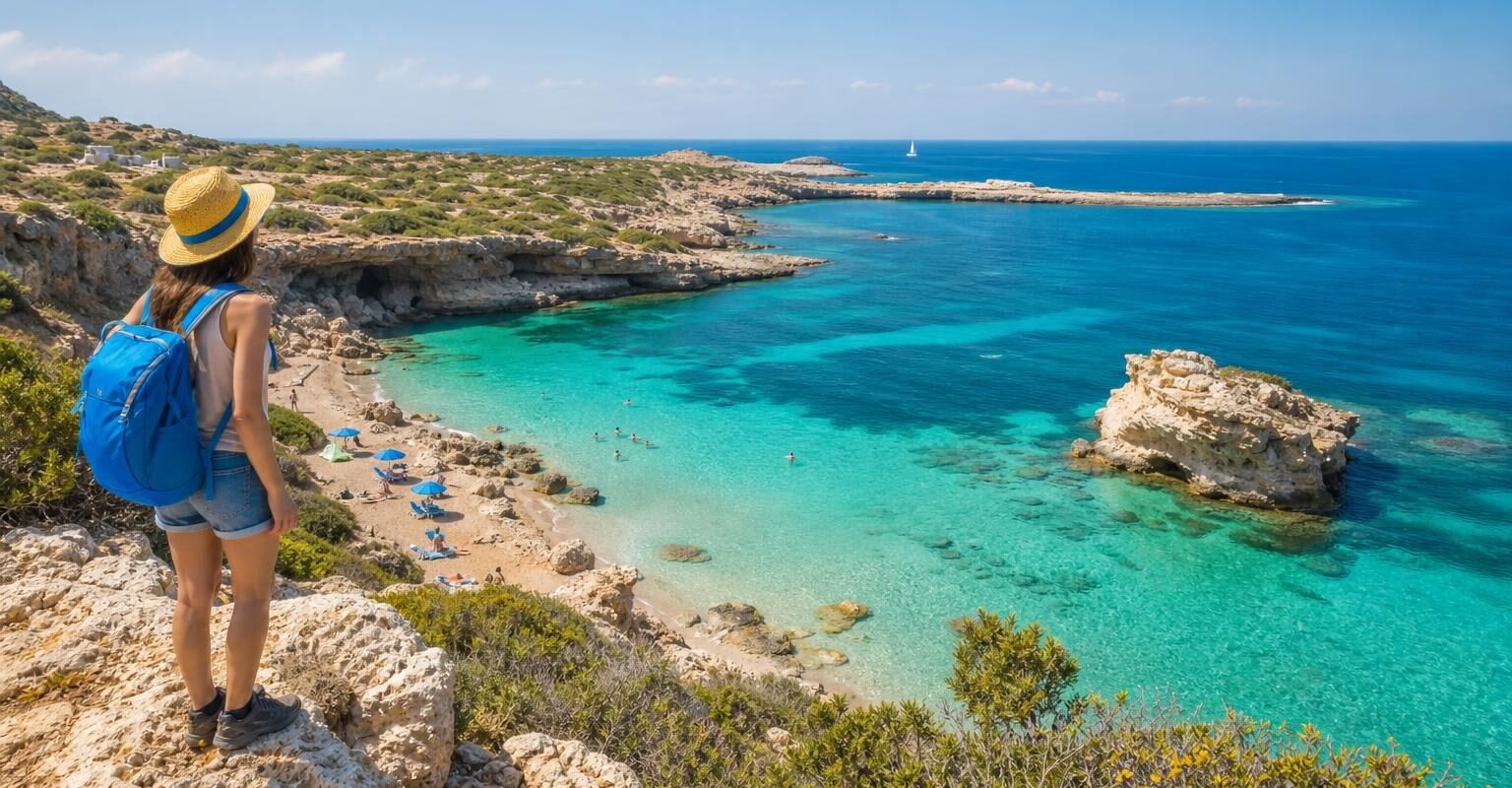
Cape Greco, Konnos Bay and the Sea Caves sit at the southeastern tip of Cyprus, forming one of the island’s most striking coastal stretches. You can cover all three in a single morning or afternoon, and a rental car makes it simple to hop between parking spots along the cape’s well-signed roads. This half-day loop works year-round, though spring and autumn deliver the best combination of mild temperatures (20-28°C) and manageable crowds.
The national forest park spans roughly 385 hectares of rocky coastline, juniper scrubland, and turquoise water. It’s a protected area, so expect no hotels or beach bars along the cape itself – just trails, viewpoints, and a small chapel perched above the sea. That raw quality is exactly what draws visitors, but it also means you need to plan ahead for water, sun protection, and footwear. The stops below are arranged in a logical driving order, starting from the Ayia Napa side and finishing at Konnos Bay near Protaras.
One thing worth knowing before you go: the cape is home to a small but recovering population of Mediterranean monk seals, with an estimated 20 to 22 individuals recorded as of early 2025. Monk seal births now occur almost annually in the Cape Greco and Akamas regions, so respecting wildlife zones isn’t optional – it’s the law. Keep that in mind as you plan your route.
Planning Your Half-Day Trip to Cape Greco National Park
A half-day here means roughly four to five hours, which is enough to hit every major stop without rushing. The park is free to enter and has no gates or opening hours, though the access road to the very tip of the cape closes at sunset.
Plan your visit around the time of day. Morning light (before 10am) is best for photography at the sea caves, where the sun hits the water at a low angle and turns it electric blue. If swimming at Konnos Bay is your priority, aim for a late morning arrival so the water has warmed up. Afternoon visits work well in spring and autumn but can be punishing in July and August, when temperatures regularly exceed 38°C and shade is scarce along the trails.
Pro Tip: Bring at least 1.5 litres of water per person. There are no shops or water fountains inside the park itself. The nearest mini-markets are in Ayia Napa or at the Konnos Bay car park kiosk.
You don’t need a 4×4. All roads within the park are paved or hard-packed gravel, suitable for any standard rental car. Just stick to marked roads – most rental agreements in Cyprus exclude off-road driving, and the rocky terrain off-track will damage tyres and undercarriage quickly.
Getting There by Car: Route and Logistics
From Ayia Napa’s main roundabout, follow signs for Cape Greco along Kavo Gkreko Avenue heading east. The drive to the first stop (Lovers’ Bridge) is about 7 km and takes roughly 10 minutes. From Protaras, head south along Konnos Road; the park entrance is about 6 km away.
If you’re based in Larnaca, the drive is around 55 km (45 minutes via the A3 motorway). From Limassol, expect about 130 km and 90 minutes. Paphos is the longest haul at roughly 200 km, making it a full-day commitment rather than a half-day trip.
| Starting Point | Distance | Drive Time | Route |
|---|---|---|---|
| Ayia Napa | 7 km | 10 min | Kavo Gkreko Ave east |
| Protaras | 6 km | 10 min | Konnos Road south |
| Larnaca | 55 km | 45 min | A3 motorway east |
| Limassol | 130 km | 90 min | A1 then A3 east |
Parking is free at all stops. Each viewpoint has a small gravel lot, though the sea caves car park fills up quickly between 10am and 2pm in summer. Arriving before 9:30am solves this problem entirely.
Important: Rental insurance issued in the Republic of Cyprus does not cover driving in the north of the island. This isn’t relevant to Cape Greco itself, but it’s worth knowing if you’re planning a wider road trip.
The Perfect Half-Day Itinerary: Map-Style Ordered Stops
Drive the loop in this order to minimise backtracking. Each stop is connected by a short drive of two to five minutes, so you’ll spend far more time exploring than sitting in the car.
Stop 1: The Iconic Lovers’ Bridge Ayia Napa
Your first stop is a natural rock arch stretching over the sea about 2 km before the main park area. Locals call it Lovers’ Bridge, and it’s become one of the most photographed spots on the island. A short footpath from the car park leads to the arch in under two minutes.
The arch itself is narrow and sits about 5 metres above the water. You can walk onto it, but the rock is uneven and can be slippery from sea spray. There are no railings. Take your photos, enjoy the view down through the clear water, and move on – this stop takes about 15 to 20 minutes.
Swimming is possible from the small rocky platform below the bridge, but entry and exit require scrambling over sharp limestone. Water shoes make a real difference here.
Stop 2: The Sea Caves and Cliff-Jumping Safety
Continue east along the coastal road for about 3 km to reach the sea caves car park. This is the most popular stop in the park, and for good reason: the eroded limestone cliffs have formed arches, tunnels, and shallow grottos that glow blue-green in morning light.
A rough footpath leads along the cliff edge to various viewpoints. You can scramble down to water level at several points, though the descent is steep and unprotected. A temporary safety fence was installed at the sea caves in May 2026 due to crumbling rock and cliff-diving accidents.
Warning: Standing directly above the cave arches is strictly prohibited due to geological instability. Rock collapses have occurred here. Stay behind any barriers and don’t climb over fencing for a better photo – it genuinely isn’t worth the risk.
Cliff jumping happens here despite the dangers. If you choose to jump, check the water depth personally (it varies with tides and seasons), never jump alone, and avoid the areas directly above cave openings where the rock is weakest. The Ayia Napa sea caves are not a supervised swimming area, and there are no lifeguards.
Stop 3: Ayii Anargyri Chapel and the Blue Lagoon
Drive another 2 km south along the cape road to reach the small whitewashed chapel of Ayii Anargyri, built into the cliff face. The chapel itself is usually open and worth a quick look inside. Below it, a set of rough steps leads down to a sheltered cove sometimes called the Blue Lagoon (not to be confused with the Blue Lagoon near Akamas).
The water here is exceptionally clear and calm, sheltered from wind by the surrounding cliffs. It’s one of the better swimming spots on the cape if you don’t mind a rocky entry. Snorkelling is excellent along the base of the cliffs, where you’ll see sea urchins, wrasse, and occasionally octopus.
This is also a key area for monk seal activity. The 2026 Fisheries Amendment Regulations impose fines up to €20,000 and potential imprisonment for harassing or feeding protected marine species. If you spot a seal, keep your distance – at least 20 metres – and don’t approach with snorkelling gear. New demarcation buoys are being installed at three Marine Protected Areas, including the Ayia Napa sea caves, to mark restricted zones for boats.
Hiking the Cape Greco Trails
The park has several marked trails ranging from easy coastal walks to short uphill climbs. None require special fitness, but all are exposed to direct sun with virtually no tree cover. Hike early or late, and wear a hat.
The Aphrodite Nature Trail: A Coastal Walk
This is the park’s signature trail – a 3 km loop that follows the cliff edge from the main car park near the radio masts. The path is well-marked with blue arrows and mostly flat, though some sections cross bare rock where you’ll need decent trainers or hiking sandals.
Allow about 60 to 90 minutes for the full loop. The trail passes several viewpoints over the sea caves from above, a couple of small coves accessible by side paths, and patches of wild thyme and juniper that scent the air in spring. It’s a genuinely beautiful walk, and the lack of shade keeps crowds thin during midday in summer.
Scaling the Peak for Panoramic Views
A separate short trail leads uphill to the highest point of the cape, marked by a large white cross visible from the road. The climb takes about 15 minutes from the car park and rewards you with 360-degree views: Ayia Napa to the west, Protaras and Famagusta Bay to the north, and on clear days, the faint outline of the Lebanese coast to the east.
This is the best spot for sunset if you’re doing an afternoon visit. Bring a jacket – the wind picks up considerably at the top, even on warm days.
Relaxing at Konnos Bay: Swimming and Water Sports
Finish your half-day at Konnos Bay, a crescent-shaped sandy beach tucked into a cove at the northern edge of the park. It’s the only proper sand beach in the Cape Greco area, and it’s well-organised with sunbeds, umbrellas, a lifeguard station, and a small beach bar.
The bay is sheltered from most wind directions, making the water calm and suitable for children. Visibility is excellent for snorkelling, especially along the rocky edges of the cove. Water sports operators on the beach offer paddleboard and kayak hire – prices change seasonally, so check on arrival.
Parking at Konnos is free but limited. A second overflow car park sits at the top of the hill, connected to the beach by a steep footpath (about a 5-minute walk down, 10 minutes back up). In peak summer, the lower car park fills by 11am.
- Sunbed and umbrella hire is available (prices vary by season – expect to pay a few euros per item in 2026)
- Showers and changing facilities are free near the lifeguard station
- The beach kiosk sells water, snacks, and basic supplies
- Swimming is supervised by lifeguards during summer months only
Tip: If Konnos Bay is too crowded, drive 5 minutes north to Fig Tree Bay in Protaras, which is larger but equally popular. Alternatively, head back to one of the quieter rocky coves you passed along the cape.
Essential Gear and Safety Tips for Coastal Exploration
The cape’s beauty comes with real hazards. Rocky coastline, strong sun, and limited infrastructure mean you need to come prepared.
- Footwear: sturdy trainers or hiking sandals with grip. Flip-flops are fine for Konnos Bay but dangerous on the cliff paths and cave scrambles.
- Sun protection: high-SPF sunscreen, a hat, and sunglasses. Reapply sunscreen after swimming. Summer temperatures regularly hit 38-40°C.
- Water: carry at least 1.5 litres per person. There’s no tap water along the trails.
- First aid: a basic kit with plasters and antiseptic is useful. Sea urchin spines are common on rocky entry points.
- Phone signal: coverage is generally good across the park, but can drop in some coves. Save offline maps before you go.
Never swim alone at the sea caves or unguarded coves. Currents can be unpredictable, especially when wind picks up from the south. Konnos Bay is the safest swimming option thanks to its sheltered position and lifeguard presence.
Practical Guide to Local Amenities and Facilities
The park itself is deliberately undeveloped, so most amenities are found at its edges.
| Facility | Location | Notes |
|---|---|---|
| Toilets | Konnos Bay car park, Ayii Anargyri chapel area | Basic but functional |
| Food and drink | Konnos Bay beach bar, Ayia Napa town | No restaurants inside the park |
| Fuel | Ayia Napa or Protaras | Fill up before entering the park |
| Medical | Napa General Hospital, Ayia Napa | Roughly 10 min drive from the park |
| Mobile signal | Throughout the park | Patchy in some coves |
If you’re renting a car for the day from Ayia Napa or Protaras, the Cape Greco loop fits neatly into a morning before returning the vehicle or heading to your next destination. CyprusCarRental’s pickup points in both towns make this straightforward.
Tap water across Cyprus is safe to drink – the government’s desalination programme now provides approximately 80% of Cyprus’s drinking water, so you can refill bottles at your hotel before setting out.
Frequently Asked Questions About Cape Greco and Konnos Bay
Is there an entrance fee for Cape Greco National Forest Park?
No. The park is free to enter and has no gates. Parking at all viewpoints and trailheads is also free. Konnos Bay beach itself is free, though sunbed hire costs a small fee.
How long does the Cape Greco hike take?
The Aphrodite Nature Trail loop is about 3 km and takes 60 to 90 minutes at a relaxed pace. The short climb to the peak viewpoint adds another 30 minutes. You don’t need to do both – they start from different car parks.
Can I visit the sea caves by boat?
Yes, boat trips depart from Ayia Napa harbour and pass along the cave coastline. However, new marine protection regulations in 2026 restrict boat access near certain caves to protect monk seal habitat. Check with tour operators for current routes.
Is Konnos Bay suitable for young children?
The sheltered cove and calm water make it one of the better family beaches in the area. The sand is soft, lifeguards are present in summer, and the beach bar sells snacks. The only downside is the steep walk from the overflow car park if the lower lot is full.
What’s the best time of year to visit?
April to June and September to October offer warm weather (22-30°C), fewer crowds, and wildflowers along the trails in spring. July and August are extremely hot, and the sea caves area gets packed. Winter visits are quiet and pleasant for hiking, but the sea is too cold for most swimmers.
Cape Greco packs a surprising amount into a small area. You can photograph the sea caves, swim at a sheltered beach, hike a coastal trail, and spot rare wildlife – all within a few hours and a few kilometres of driving. Bring water, wear proper shoes, respect the fencing and wildlife zones, and you’ll have one of the best half-days Cyprus can offer. Check local conditions before you go, particularly any updated restrictions around the marine protected areas, and give yourself permission to linger at whichever stop captures you most.