
Table of Contents
- An Overview of Nissi Beach Ayia Napa: Cyprus’ Iconic Shoreline
- Getting to Nissi Beach by Car
- Nissi Beach Parking: Where to Leave Your Vehicle
- The Geography of Nissi Beach Island and the Sandbar
- Best Time to Go: Avoiding the Crowds and Finding Your Spot
- Beach Amenities: Sunbeds, Water Sports, and Beach Bars
- Nissi Beach Off-Season: What to Expect from October to April
- Comparing the Best Beaches in Ayia Napa
- Quiet Alternatives: Landa and Makronissos Beach
- Essential Tips for a Perfect Day at Nissi Beach
- Frequently Asked Questions About Nissi Beach
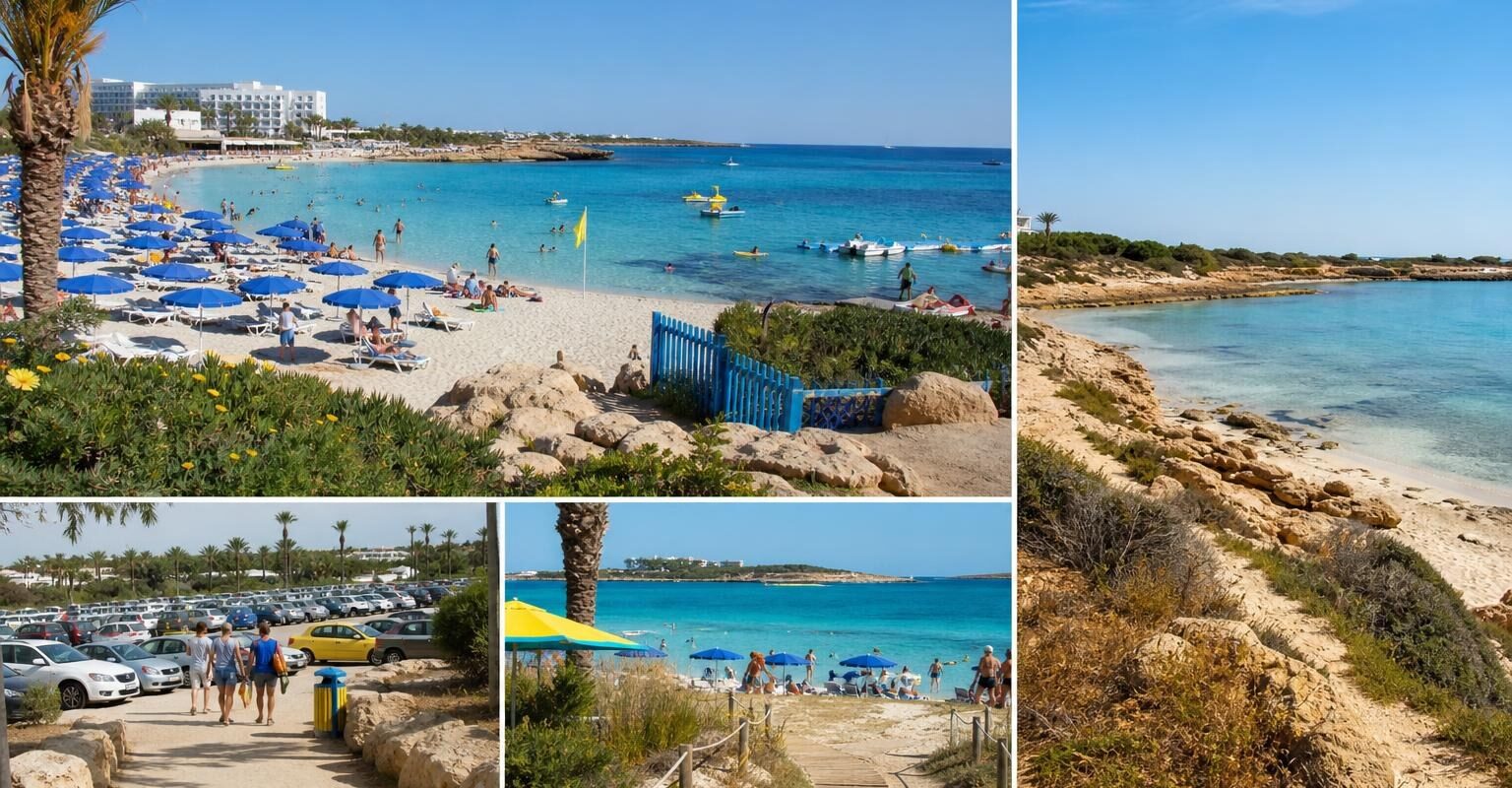
Nissi Beach sits on the western edge of Ayia Napa, a crescent of fine white sand curving around a shallow turquoise lagoon. If you’re driving a rental car around Cyprus, this is the beach you’ll hear about most, and for good reason. The sand is soft, the water stays shallow for dozens of metres, and a low sandbar connects the shore to a small rocky islet you can wade to on calm days. But the experience changes dramatically depending on when you arrive, where you park, and whether you visit in peak summer or the quieter shoulder months.
Cyprus recorded over 4.5 million tourist arrivals in 2025, a 12.2% jump on the previous year. A significant share of those visitors passed through Ayia Napa, and many ended up on this particular stretch of coast. That popularity brings energy and atmosphere, but it also means parking headaches, early-morning sunbed races, and crowded waters in July and August. Knowing what to expect, and when to show up, makes the difference between a frustrating day and a genuinely enjoyable one.
This guide covers the practical details: how to get there, what parking costs, what the beach looks like off-season, and where to go when it’s too packed to enjoy.
An Overview of Nissi Beach Ayia Napa: Cyprus’ Iconic Shoreline
Nissi Beach stretches roughly 500 metres along a west-facing bay about 3 km from Ayia Napa’s town centre. The sand is unusually pale for the eastern Mediterranean, closer to Caribbean white than the coarser golden sand you’ll find further along the coast. The water is calm and shallow, rarely deeper than waist height for the first 30 or 40 metres out, which makes it popular with families and anyone who prefers to ease into the sea rather than plunge.
The beach holds Blue Flag status for 2026, a designation it has maintained for years. Cyprus consistently ranks at the top of European bathing water quality tables, and Nissi is one of the reasons why. Lifeguards are on duty throughout the summer season, typically from April to October, and the water is tested regularly.
What sets this beach apart from others in the area is the combination of its natural features: the sandbar, the islet, the sheltered bay, and the fine sand. It’s not a quiet, secluded cove. It’s a well-organised beach with full facilities, a party atmosphere in summer, and a completely different character in winter.
Getting to Nissi Beach by Car
From Larnaca Airport, the drive to Nissi Beach takes roughly 50 minutes along the A3 motorway. The road is fully paved and well-signposted. Head east on the A3 toward Ayia Napa, exit toward the town centre, and follow signs for Nissi Avenue (also marked as Nissi Road on some maps). The final stretch runs through a hotel-lined strip before reaching the beach.
If you’re coming from Limassol, expect about 90 minutes via the A1 and A3. From Paphos, it’s closer to two and a half hours. The motorway network is straightforward, but GPS is more reliable than local signage once you leave the main highway.
Tip: Most rental agreements in Cyprus exclude off-road driving, and insurance from Republic of Cyprus rental companies does not cover travel into the north. Stick to paved roads and you’ll have no issues reaching any beach on the south coast.
Arriving before 9:00 AM in summer is essential if you want a parking spot close to the beach. By mid-morning, Nissi Avenue fills up and you may find yourself circling for 20 minutes or more.
Nissi Beach Parking: Where to Leave Your Vehicle
Parking is the single biggest frustration visitors report about this beach. The area wasn’t designed for the volume of traffic it now receives, and in peak season the streets around Nissi Avenue become congested by late morning.
Official Council Lots and Seasonal Charges
The Ayia Napa Municipality operates several surface car parks along Nissi Avenue. These are clearly marked and patrolled during summer. As of 2026, municipal parking rates are standardised at €2.00 for the first two hours and €3.50 for up to five hours. Machines accept coins and cards.
These lots fill quickly. In July and August, they’re often full by 10:00 AM. If you’re planning a full day, arrive early or consider coming in the late afternoon when spaces open up as day-trippers leave.
Street Parking and Private Hotel Options
Side streets off Nissi Avenue offer free parking, but spaces are limited and you may end up walking 10 to 15 minutes. Some hotels along the strip offer paid parking to non-guests, typically at similar rates to the municipal lots. Ask at reception, as these aren’t always advertised.
Important: Don’t park on pavements or block access roads. Ayia Napa police do issue tickets, and rental companies will pass the fine on to you.
Public transport is a viable alternative. The 101 and 102 bus lines from Ayia Napa centre stop within a two-minute walk of the shore, which eliminates the parking problem entirely. The bus costs a couple of euros each way.
The Geography of Nissi Beach Island and the Sandbar
The name “Nissi” comes from the Greek word for island, and the small rocky islet sitting just offshore is the beach’s defining feature. A natural sandbar connects the islet to the main beach, and on calm days the water over the bar is ankle-deep. You can walk across in a few minutes.
The islet itself is a low, flat limestone outcrop covered in scrubby vegetation. It’s not large, maybe 50 metres across, but it gives you a different perspective on the bay and a quieter spot to sit if the main beach is packed. The rocks around it are popular for snorkelling, though the marine life is modest compared to deeper sites like Cape Greco.
The sandbar shifts slightly from year to year depending on winter storms. Some seasons it’s wider and more prominent; other years it narrows. Water depth over the bar can range from a few centimetres to knee-height depending on conditions. After strong winds from the east, the bar may be submerged entirely, so check before wading across with small children.
Best Time to Go: Avoiding the Crowds and Finding Your Spot
Peak season runs from mid-June through early September, and the beach is at its most crowded during July and August. Sunbeds are typically fully occupied by 9:30 AM on summer mornings, and the water can feel more like a public pool than a bay.
If you want the warm water and sunshine of summer but fewer bodies, aim for early June or late September. Water temperatures in early June sit around 22-23°C, warm enough for comfortable swimming. By late September, the sea has absorbed months of summer heat and often reaches 26-27°C, sometimes warmer than the air in the mornings.
| Month | Sea Temp (approx.) | Crowd Level | Sunbed Availability |
|---|---|---|---|
| May | 20-22°C | Low-moderate | Widely available |
| June | 22-24°C | Moderate | Available before 10 AM |
| July | 25-27°C | Very high | Full by 9:30 AM |
| August | 27-28°C | Very high | Full by 9:30 AM |
| September | 26-27°C | Moderate | Available most of the day |
| October | 24-25°C | Low | Widely available |
Time of day matters as much as month. Even in August, arriving after 4:00 PM gives you a few hours of sun, calmer water, and space to spread out. The light at that hour is also better for photos.
Beach Amenities: Sunbeds, Water Sports, and Beach Bars
The Ayia Napa Municipality increased beach service fees for 2026 for the first time in two decades. A standard set of two sunbeds and one umbrella now costs €10.00, up from the previous €7.50 cap. Individual sunbeds are €3.50 and umbrellas €3.00. The price increase funds a €2 million coastal infrastructure programme that has replaced older sunbeds and upgraded public changing facilities.
Water sports operators line the eastern end of the beach. You’ll find jet skis, banana boats, parasailing, and paddleboard hire. Prices vary by operator but expect to pay €15-25 for a paddleboard session and €40-60 for parasailing. Always confirm prices before committing, as they’re not always posted clearly.
Beach bars are a major part of the Nissi experience. The most well-known sits right on the sand and runs DJ sets and foam parties through the summer months. If you’re after a quieter atmosphere, the western end of the beach tends to be calmer, with fewer speakers and more families.
Note: You’re welcome to bring your own towel and sit on the sand for free. The sunbed charge only applies if you use the rented equipment. There’s no entry fee for the beach itself.
Nissi Beach Off-Season: What to Expect from October to April
The beach transforms once the summer crowds leave. From late October through March, you’ll often have the sand almost entirely to yourself. The atmosphere shifts from party beach to peaceful coastal walk, and the natural beauty of the bay becomes much easier to appreciate.
Winter Swimming and Quiet Coastal Walks
Sea temperatures remain swimmable through October and into November, hovering around 22-24°C in October and dropping to 18-19°C by December. Some locals and hardy visitors swim year-round. January and February are the coldest months, with water around 16-17°C, but air temperatures on sunny days can still reach 15-18°C.
The coastal path connecting Nissi to Makronissos and beyond is at its best in winter. Wildflowers appear from February, and the light has a clarity that summer haze obscures. If you’ve rented a car through a company like CyprusCarRental, you can easily combine a morning walk along this stretch with an afternoon exploring Cape Greco or the sea caves.
Facility Availability During the Cooler Months
Most beach infrastructure shuts down by the end of October. Sunbed operators, water sports vendors, and the beach bars close for the season. Lifeguards are not on duty. Public toilets near the car parks may remain open, but don’t count on it.
The beach itself remains fully accessible. You won’t find a locked gate or a “closed” sign. Bring your own towel, water, and snacks, because there’s nothing to buy on the sand until April or May. A few restaurants and cafés along Nissi Avenue stay open year-round, so you won’t go hungry, but the beachfront itself is bare.
Comparing the Best Beaches in Ayia Napa
Ayia Napa has over a dozen beaches along its coastline, and Nissi isn’t always the right choice depending on what you’re after.
| Beach | Sand Quality | Crowds (Summer) | Facilities | Best For |
|---|---|---|---|---|
| Nissi | Fine white | Very high | Full | Atmosphere, shallow water |
| Makronissos | Fine white | Moderate | Good | Families, calmer vibe |
| Landa (Golden Beach) | Fine golden | Moderate-high | Full | Mix of calm and social |
| Konnos Bay | Coarse golden | Moderate | Basic | Snorkelling, scenery |
| Grecian Bay | Fine golden | High | Full | Hotel-adjacent convenience |
Konnos Bay, tucked into a cove beneath Cape Greco, is worth the short drive if you want clearer water and better snorkelling. The access road is steep but paved, and there’s a small car park at the top with steps down to the beach.
Grecian Bay sits right in the centre of Ayia Napa and is the most convenient if you’re staying in town, but it lacks the character of Nissi or the seclusion of Konnos.
Quiet Alternatives: Landa and Makronissos Beach
When Nissi is packed, Makronissos Beach is the best fallback option. It’s about a five-minute drive west, or 15 minutes on foot along the coastal path. The sand is similar in quality, the water is just as clear, and the crowds are noticeably thinner even in August.
Makronissos is actually three small beaches separated by low rocky headlands. The westernmost cove tends to be the quietest. Parking is easier here, with a free dirt lot behind the beach that rarely fills completely.
Landa Beach, sometimes called Golden Beach, sits between Nissi and Makronissos. It’s a longer stretch of sand with a slightly more golden hue. Facilities are comparable to Nissi, including sunbed hire at the same municipal rates, but the atmosphere is less intense. If you want the beach experience without the party soundtrack, Landa is a strong choice.
Both alternatives are easily reachable by car in under five minutes from Nissi, making them practical options if you arrive at Nissi and find it too crowded.
Essential Tips for a Perfect Day at Nissi Beach
A few practical points that make a real difference:
- Arrive early or late. Before 9:00 AM or after 4:00 PM gives you the best chance of parking and space on the sand.
- Bring water shoes. The sand is soft, but the rocks around the islet and the edges of the bay can be sharp.
- Use high-factor sunscreen. UV levels in Cyprus are extreme from May to September. Reapply after swimming.
- Carry cash and card. Sunbed operators and some water sports vendors prefer cash, but parking machines take cards.
- Don’t leave valuables unattended. Petty theft from unattended bags does happen on busy days. Use a waterproof pouch or take turns watching your things.
- Check wind direction. Easterly winds can stir up the water and make the sandbar crossing tricky. Westerly or calm days are best.
Warning: Jellyfish occasionally appear along this coast, particularly in late summer. They’re usually the mild, non-dangerous variety, but stings are uncomfortable. If you see purple flags or warning signs, stay out of the water.
Frequently Asked Questions About Nissi Beach
Is Nissi Beach free to visit?
Yes. There’s no entry fee. You only pay if you rent sunbeds (€3.50 each) or an umbrella (€3.00) as of 2026. You’re free to lay your own towel on the sand at no cost.
Can you walk to the island at Nissi Beach?
On calm days, yes. A natural sandbar connects the shore to the small rocky islet, and the water is typically ankle to knee-deep. After storms or strong easterly winds, the bar may be submerged.
Is Nissi Beach suitable for young children?
The shallow, calm water makes it one of the better choices for families. The seabed is sandy with a gentle slope. Lifeguards patrol during summer months. The main drawback is the noise and crowds in July and August, so consider visiting in June or September with young children.
How much does parking cost near Nissi Beach?
Municipal car parks along Nissi Avenue charge €2.00 for two hours and €3.50 for up to five hours (2026 rates). Some side streets have free parking, but spaces are limited.
Is the beach worth visiting in winter?
It depends on what you’re looking for. The facilities are closed and there are no lifeguards, but the beach is open and often deserted. Winter is ideal for walks, photography, and quiet swims if you don’t mind cooler water. The coastal path is particularly pleasant from November through March.
Nissi Beach earns its reputation, but it rewards visitors who plan ahead. Arrive early in summer, know where to park, and don’t be afraid to visit outside peak season when the bay shows a completely different side. If the crowds prove too much, Makronissos and Landa are minutes away by car. The best approach is to rent a car, keep your schedule flexible, and let the conditions on the day guide your choice. That flexibility is what turns a good beach day into a great one.