
Table of Contents
- Discovering the Mythical Adonis Baths Waterfall
- Location and Landmarks Near Kissonerga
- How to Reach Adonis Baths Paphos
- What to Expect at the Site: Facilities and Fees
- Swimming and Exploring the Adonis Waterfall Cyprus
- Is It Worth It? Comparing Waterfalls in Cyprus
- Practical Tips for Your Visit
- Frequently Asked Questions
The Adonis Baths waterfall sits about 12 km northeast of Paphos, on a privately run site that markets itself as the mythological meeting place of Adonis and Aphrodite. Is it worth the bumpy drive and the entrance fee? That depends on what you’re after. The pools are real, the water is cold, and the setting is genuinely attractive, but the experience is more rustic theme park than pristine wilderness. If you’re expecting a thundering cascade, you’ll be disappointed. If you want a quirky half-day outing with a swim in a natural rock pool, it can be a good time.
The catch is getting there. The access road is unpaved, rough, and occasionally dangerous. Most standard rental cars can handle it in dry conditions if you drive carefully, but the route demands patience and a willingness to accept some dust. This guide covers everything you need to know: the road, the fees, the swimming, and whether the whole thing is actually worth your time.
Discovering the Mythical Adonis Baths Waterfall
The legend goes like this: Aphrodite, goddess of love, used to bathe in these rock pools with her mortal lover Adonis. He was a hunter; she was smitten. The pools, fed by a small waterfall trickling down a cliff face, became their secret retreat. It’s a nice story, and the site leans into it heavily with statues, signage, and a general mythology-meets-countryside atmosphere.
The reality is more grounded. This is a privately operated attraction, not a government-run archaeological site or national park. The waterfall itself is modest, especially in summer when water flow drops significantly. Spring, after winter rains, is when the falls look their best. By August, you’re looking at more of a trickle than a cascade.
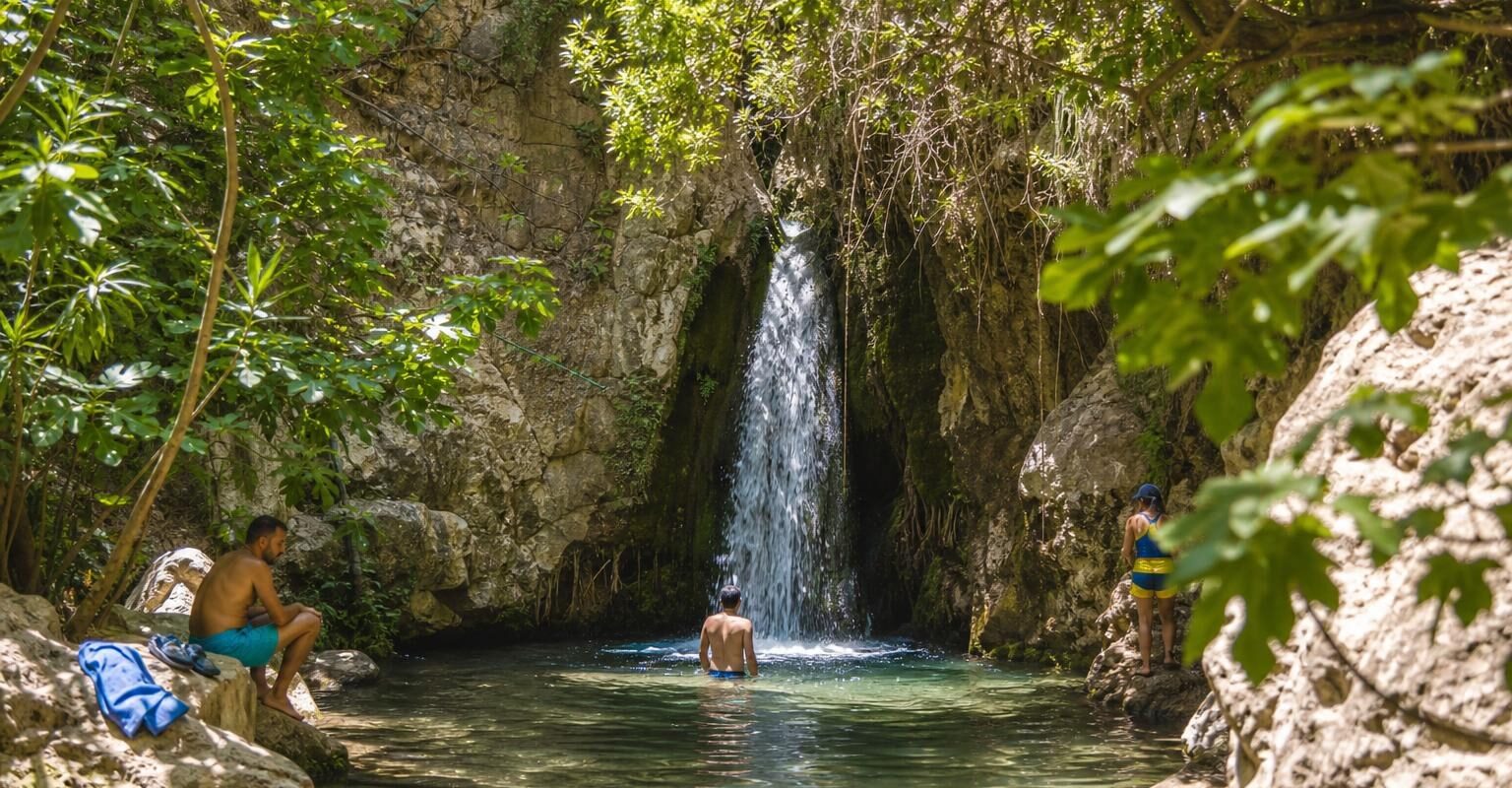
That said, the setting has genuine charm. The pools sit in a narrow gorge surrounded by fig trees, carob trees, and wild vegetation. The rock formations are interesting, and the water, while shallow in places, is deep enough for swimming in the main pool. It’s a world away from the resort beaches of Coral Bay, and that contrast is part of the appeal.
The site has been operating for years as a tourist attraction, and it knows its audience. Expect a mix of families, couples, and small tour groups. It’s not a wilderness adventure, but it’s not pretending to be one either.
Location and Landmarks Near Kissonerga
The Adonis Baths sit in the hills above the Paphos district, roughly between the villages of Tala and Kissonerga. If you’re staying in Paphos town, the site is about 15-20 minutes by car to the turnoff, plus another 15-20 minutes on the dirt road. From Coral Bay, it’s slightly closer.
The surrounding area is worth knowing about. Tala village, perched on a hillside, has a handful of tavernas and offers views across the coastal plain. The Agios Neophytos Monastery, a 12th-century cave monastery carved into the rock, is just a few kilometres from the turnoff to the baths and makes a natural pairing for a half-day trip.
Kissonerga itself is a quiet village on the coast road north of Paphos, known more for its banana plantations than its tourism. The Coral Bay area, about 5 km south, is where most of the tourist infrastructure sits: hotels, restaurants, and the popular sandy beach.
If you’re planning a day in this part of the Paphos district, a reasonable itinerary might look like this:
- Morning visit to the Adonis Baths (before the heat peaks)
- Lunch at a taverna in Tala village
- Afternoon at Agios Neophytos Monastery or Coral Bay beach
The area is compact enough that you can fit all of this into a single day with a car.
How to Reach Adonis Baths Paphos
Getting there by car
A rental car is essentially the only practical way to reach the site. There’s no public bus service, and while some tour operators include it on excursion itineraries, driving yourself gives you control over timing.
From Paphos town, head north on the B7 coast road toward Coral Bay. Before reaching Coral Bay, you’ll see signs for Tala village. The recommended approach is to follow physical signs from Tala Village or Coral Bay rather than relying on GPS, which can send you down unsuitable tracks. Once you pick up the brown tourist signs, stay on the marked route until you reach the site entrance.
| Detail | Info |
|---|---|
| Starting point | Paphos town centre |
| Distance | ~15 km |
| Drive time | 30-40 minutes (including dirt road) |
| Road surface | Paved to turnoff, then dirt/gravel |
| Parking | Free on-site |
| Best approach | Via Tala village, following physical signs |
Safety Warning: The Dirt Road Condition
The last 3-4 km of the route is an unpaved track with loose gravel, potholes, and steep sections. In dry weather, most standard cars can manage it if you drive slowly, but it’s not comfortable, and you will hear stones hitting the underside of your vehicle.
⚠️ Warning: The access road has been the site of serious incidents. In April 2026, the site was temporarily closed after heavy weather stranded visitors who needed rescue. In October 2026, a fire broke out on the access road, requiring emergency services. Check conditions locally before setting out, especially after rain or during dry, high-fire-risk periods.
Here’s the critical rental car issue: most car hire agreements in Cyprus exclude coverage for damage sustained on unpaved roads. If you scrape the underside of your vehicle or puncture a tyre on the dirt track, you may be liable for the full repair cost. Check your rental contract before you go. If you’re concerned, a higher-clearance vehicle is a sensible choice, though not strictly necessary in dry conditions.
🔑 Key Takeaway: Drive slowly on the dirt section (15-20 km/h), keep your windows up to avoid dust, and don’t attempt the road after heavy rain. If your rental agreement explicitly prohibits off-road driving, this track likely counts.
What to Expect at the Site: Facilities and Fees
The Adonis Baths is a paid attraction, not a free natural site. As of 2026, the entrance fee is €15 for adults and €10 for children. That price includes access to the pools, the waterfall area, the folk museum, and the statue garden. Whether that represents good value is debatable, and we’ll get to that.
The facilities are basic but functional. There are toilets, a small café selling drinks and snacks, and shaded seating areas. Don’t expect anything polished: this is a countryside attraction, not a resort. Changing facilities exist but are rudimentary, so wearing your swimsuit under your clothes is the practical move.
Operating hours vary by season. For autumn (September and October), the site is open from 09:00 to 18:30, while winter hours run from 09:00 to 17:00. Summer hours typically extend later, but it’s worth confirming directly, as these can shift. Arriving early, ideally before 10:00, means fewer crowds and cooler temperatures for the walk down to the pools.
💡 Tip: Bring water shoes or sandals with good grip. The rocks around the pools are slippery, and the path down is uneven. A towel, sunscreen, and drinking water are also essentials: there’s limited shade near the water.
Swimming and Exploring the Adonis Waterfall Cyprus
The Upper and Lower Natural Pools
The main draw is the lower pool, which sits directly beneath the waterfall. It’s deep enough for swimming, roughly chest to head height in the centre, though depths vary with rainfall and season. The water is extremely cold even at the peak of summer, fed by mountain springs that stay cool year-round. Expect a sharp intake of breath when you get in.
The upper pool is smaller and shallower, better suited to wading or sitting in the water rather than proper swimming. The rocks around both pools are smooth in places but jagged in others, so watch your footing. There are no lifeguards on duty.
Swimming here is genuinely refreshing after the hot, dusty drive. The gorge provides some natural shade, and the sound of water on rock creates a pleasant atmosphere. It’s not a large site: you can see everything in 60-90 minutes, including a swim. Most visitors spend around two hours total.
Spring (March to May) offers the best water flow and the most photogenic waterfall. By late summer, the falls slow to a thin stream, and the pools can look less impressive. If the waterfall itself matters to you, time your visit accordingly.
Statues and the Folk Museum
Scattered around the site are life-sized statues of figures from Greek mythology: Aphrodite, Adonis, Zeus, and others. They’re not exactly museum-quality sculpture, but they add a playful character to the place. One local tradition claims that touching certain statues aids fertility, which draws a specific subset of visitors.
The folk museum is a small collection of traditional Cypriot agricultural tools, household items, and crafts. It takes about 10-15 minutes to walk through. It’s mildly interesting as a snapshot of rural Cypriot life but unlikely to be the highlight of anyone’s visit.
Together, the statues and museum give the site a theme-park quality that some visitors enjoy and others find tacky. Your reaction will depend on your expectations. If you approach it as a lighthearted countryside outing rather than a serious cultural experience, you’ll probably have a better time.
Is It Worth It? Comparing Waterfalls in Cyprus
This is the question everyone asks, and the honest answer is: it depends on who you are.
The Adonis Baths work well for families with older children who want a swim in a natural pool and don’t mind the drive. Couples looking for something different from a beach day will find it a pleasant change of pace. The mythology angle, while commercialised, adds a bit of fun.
It’s less suitable for anyone expecting dramatic scenery. Cyprus isn’t Iceland: the island’s waterfalls are modest by international standards. The Adonis waterfall is small, and in summer it can be underwhelming. If you’ve seen waterfalls elsewhere in Europe, manage your expectations.
How does it compare to other waterfalls in Cyprus? Here’s a quick overview:
| Waterfall | Location | Access | Entry Fee | Swimming |
|---|---|---|---|---|
| Adonis Baths | Near Tala/Kissonerga, Paphos | Dirt road, any car in dry weather | €15 adult / €10 child (2026) | Yes, cold natural pools |
| Millomeri Falls | Platres, Troodos | Hiking trail (~20 min walk) | Free | No (too shallow) |
| Caledonia Falls | Near Platres, Troodos | Hiking trail (~40 min walk) | Free | No |
| Chantara Falls | Trooditissa, Troodos | Short walk from road | Free | Wading only |
The Troodos waterfalls are taller and more dramatic, but none offer proper swimming. They’re also free to visit, which makes the €15 fee at the Adonis Baths feel steep by comparison. The trade-off is that the Adonis site gives you pools you can actually swim in, plus facilities and a bit of entertainment value.
✅ Quick Verdict: Worth it if you want a swim in a natural rock pool and enjoy quirky attractions. Skip it if you’re after serious hiking, dramatic waterfalls, or free outdoor experiences. Best visited in spring when the water flow is strongest.
Practical Tips for Your Visit
A few things that will make your trip smoother:
- Go early in the morning. The site gets busier from late morning, and the heat makes the dirt road drive less pleasant.
- Wear sturdy sandals or water shoes, not flip-flops. The rocks are slippery and the path is uneven.
- Bring your own water and snacks. The on-site café is limited and pricey.
- Carry a dry bag or plastic bag for your phone and valuables while swimming.
- Apply sunscreen before you arrive. There’s limited shade at the pools.
- Check road conditions if there’s been recent rain. The dirt track becomes slippery and potentially impassable in wet weather.
If you’re renting a car through a company like CyprusCarRental, ask specifically about their policy on unpaved roads before you set out. Some providers are more lenient than others, and knowing where you stand avoids unpleasant surprises at the return desk.
The best months to visit are March through May, when the waterfall flows well and temperatures are comfortable for both the drive and the swim. June through August is fine for swimming but the falls are at their weakest. Avoid visiting after heavy rain: the road becomes dangerous and the site may close without notice.
💡 Pro Tip: Combine the Adonis Baths with a visit to the Avakas Gorge (about 30 minutes’ drive) for a full day of natural attractions in the Paphos district. Avakas is free to enter and offers a spectacular narrow gorge walk, though it also requires a short drive on an unpaved road.
Frequently Asked Questions
Can I visit the Adonis Baths without a car?
Realistically, no. There’s no public transport to the site. Some organised tours from Paphos include a stop here, but they limit your time. A rental car gives you the flexibility to arrive early and stay as long as you like.
Is the water safe to swim in?
The pools are natural spring-fed water, and locals have been swimming in them for years. There are no formal water quality tests published for visitors, and there are no lifeguards. Swim at your own risk, watch for slippery rocks, and don’t jump from heights into shallow sections.
How long should I plan for the visit?
Most people spend 90 minutes to two hours at the site. That’s enough time to explore the pools, take a swim, wander through the statue garden and folk museum, and have a drink at the café.
Is the Adonis waterfall suitable for young children?
Older children who can swim will enjoy the pools. For toddlers and very young children, the uneven terrain, cold water, and lack of safety barriers make it less ideal. Use your judgement based on your child’s confidence around water and rocks.
Do I need a 4×4 to get there?
Not in dry conditions. A standard car can manage the dirt road if you drive slowly and carefully. After rain, the road deteriorates significantly, and a 4×4 becomes much more advisable. In any case, check your rental agreement for off-road exclusions.
The Adonis Baths won’t top anyone’s list of Europe’s great waterfalls, and at €15 per adult, it’s not the cheapest day out in Cyprus. But it offers something you won’t find at the Troodos falls: a proper swim in a cold, spring-fed rock pool surrounded by wild greenery. Treat it as a fun, slightly offbeat half-day adventure rather than a bucket-list destination, and you’ll come away satisfied. Just check that dirt road before you commit.