
Table of Contents
- Cyprus Autumn Festival Calendar 2026: Key Dates and Locations
- The Grape Harvest: Palouze and Soushouko Festivals in October
- Kyperounta Apple Festival: A Pitsilia Highland Highlight
- Autumn Public Holidays and Cultural Commemorations
- Zivania Festivals: Warming Up in November
- The Grand Opening of Cyprus Christmas Villages 2026
- Essential Travel Logistics for Cyprus Village Festivals
- Cyprus Autumn Events FAQ
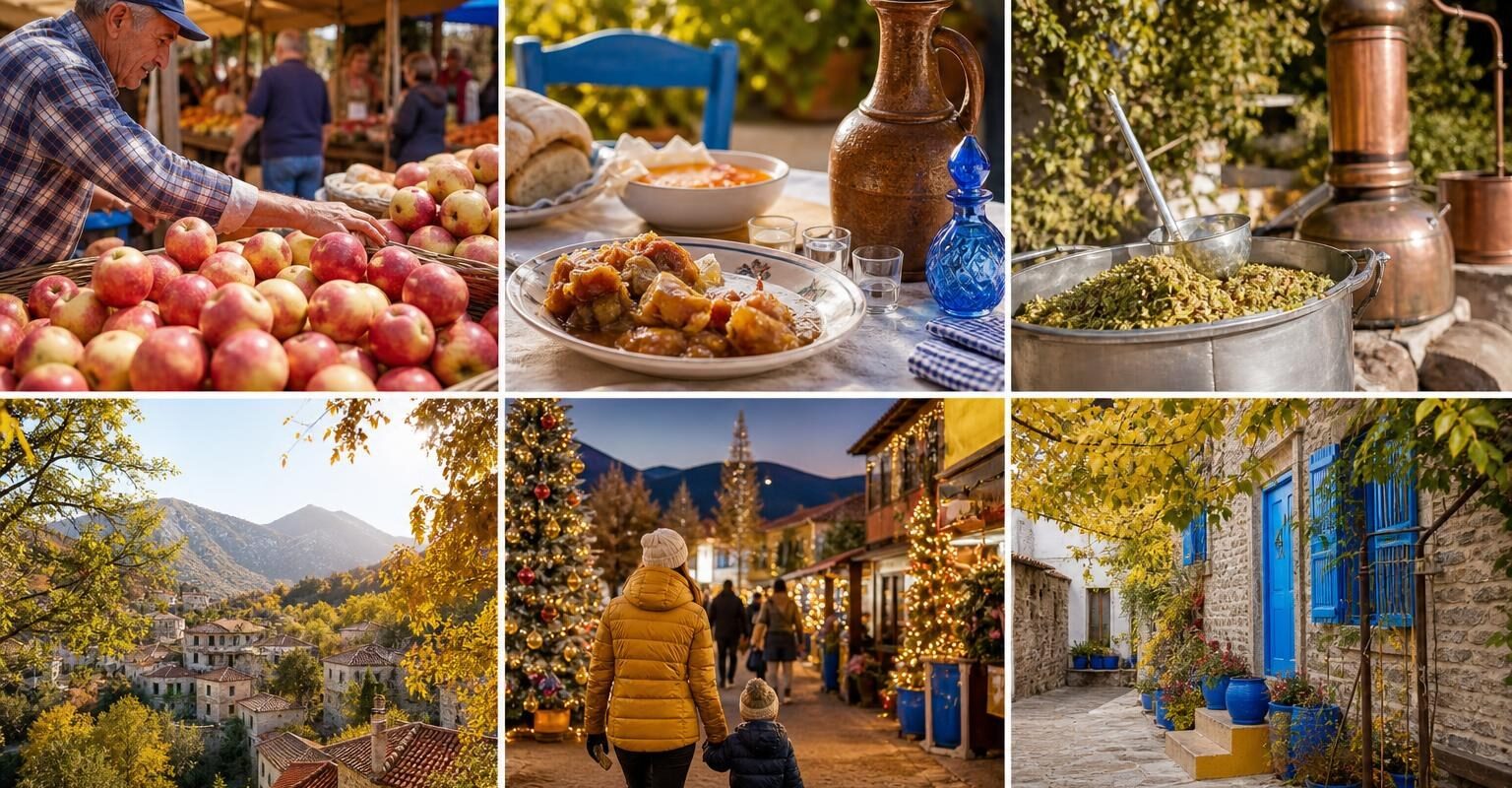
Cyprus doesn’t shut down when summer ends. From October through late November, the island’s mountain villages come alive with grape festivals, apple harvests, zivania distillation, and the opening of festive Christmas markets. If you’re planning a trip during the cooler months, this calendar of Cyprus festivals in autumn 2026 will help you pin down dates, routes, and what to expect on the ground.
The Cypriot government’s National Tourism Strategy 2035 aims to attract five million annual visitors while actively reducing seasonality. That means more investment in autumn and winter events, better infrastructure in highland villages, and a genuine push to draw travellers beyond the beach-season window. For anyone with a rental car and a few free weekends, the timing couldn’t be better.
Cyprus Autumn Festival Calendar 2026: Key Dates and Locations
The table below gathers the main autumn and early-winter events into one reference. Some dates are confirmed for 2026; others follow established annual patterns but haven’t been officially announced yet. Where a date is marked TBC, check with the local community council or the Cyprus Tourism Organisation closer to the time.
| Event | Typical Date (2026) | Location | Status |
|---|---|---|---|
| Pachna Grape Must Festival | 1 October | Pachna, Limassol district | Confirmed |
| Arsos Grape & Palouze Festival | Early October | Arsos, Limassol district | TBC |
| Lofou Grape Festival | Early October | Lofou, Limassol district | TBC |
| Kyperounta Apple Festival | Mid-October | Kyperounta, Pitsilia | TBC |
| Ochi Day (public holiday) | 28 October | Nationwide | Confirmed |
| Halloween events (Limassol, Paphos) | 31 October | Various | TBC |
| Alona Zivania Festival | Early November | Alona, Pitsilia | TBC |
| Pelendri Zivania Festival | Mid-November | Pelendri, Limassol district | TBC |
| Christmas Villages opening | 21 November | Nine villages islandwide | Confirmed |
Tip: Autumn temperatures in the Troodos highlands sit between 10°C and 20°C during October, dropping to 5°C – 15°C by November. Pack layers and a waterproof jacket, especially for evening festivals.
The Grape Harvest: Palouze and Soushouko Festivals in October
October is grape-must season across the southern slopes of the Troodos mountains. Villages that have grown Mavro and Xynisteri grapes for centuries mark the harvest with communal cooking of palouze (a thick grape-must pudding) and the preparation of soushouko (strings of almonds dipped repeatedly in grape must until they form a chewy, sweet coating). These aren’t tourist-facing productions: they’re genuine village traditions where families cook together in the square and visitors are welcome to join.
The Pachna grape must festival on 1 October 2026 features zymotos ppalouzes, a traditional local delicacy specific to that village. Pachna sits about 35 km north of Limassol, roughly a 40-minute drive on paved roads through the wine villages. Parking is usually along the main village road, and the event runs from mid-morning into the evening.
Arsos and Lofou: Traditions of the Vine
Arsos and Lofou, both in the Limassol wine-village cluster, typically hold their own grape and palouze festivals in the first two weeks of October. Arsos is one of the larger wine villages, with stone-built houses lining narrow streets and a central square that becomes the cooking and tasting area during the festival. Lofou, smaller and quieter, offers a similar atmosphere but with fewer crowds.
Getting there by car: Both villages are accessible from the Limassol-Platres road (B8). Arsos is about 40 km from Limassol (45 minutes); Lofou is 30 km (35 minutes). Roads are fully paved. Street parking is limited during festivals, so arrive early or be prepared to walk from the village outskirts.
Important: These festivals serve local wine and zivania freely. Cyprus has a strict blood alcohol limit of 0.05% (22 μg per 100 ml of breath). Don’t drink and drive: arrange a designated driver, book a taxi, or stay overnight in one of the village guesthouses.
Kyperounta Apple Festival: A Pitsilia Highland Highlight
Kyperounta sits at roughly 1,100 metres above sea level in the Pitsilia region, east of the main Troodos massif. The village is known for its apple orchards, and the annual Kyperounta apple festival typically falls in mid-October, timed to coincide with the tail end of the harvest. The exact 2026 date hasn’t been confirmed at the time of writing: check with the Kyperounta community council or the Deputy Ministry of Tourism for updates.
The festival centres on apple-based products: fresh fruit, apple pies, apple juice, and preserves. Local producers set up stalls in the village square, and there’s usually live traditional music, folk dancing, and cooking demonstrations. It’s a small, genuinely local event rather than a large commercial fair, which is part of its appeal.
Getting there by car: From Limassol, take the road toward Agros via Pelendri and continue north. The drive is about 65 km and takes roughly 75 minutes. From Nicosia, head south through Kakopetria and across the Troodos range: roughly 80 km, about 90 minutes. Roads are paved but winding, with some steep sections. The Pitsilia region’s highland routes pass through several other villages worth a stop, including Agros and Chandria.
Note: Most car rental agreements in Cyprus exclude unpaved or off-road driving. The roads to Kyperounta are paved, but some smaller tracks branching off into orchards and surrounding hills are not. Stick to tarmac to stay within your rental terms.
Autumn Public Holidays and Cultural Commemorations
Cyprus observes two significant public holidays during the autumn period. Greek National Day, commonly known as Ochi Day, falls on 28 October. The other is the proclamation of the Republic of Cyprus on 1 October, though this doesn’t typically involve large public events beyond official ceremonies.
On public holidays, banks, government offices, and many shops close. Restaurants, cafés, and tourist-facing businesses in resort towns generally stay open. If your trip coincides with 28 October, plan fuel stops and any essential shopping for the day before.
Ochi Day: Parades and Traditions on 28 October
Ochi Day commemorates Greece’s rejection of Mussolini’s ultimatum in 1940. In Cyprus, the day is marked with military and student parades in every major town. The largest parades take place in Nicosia, Limassol, Larnaca, and Paphos, usually starting around 10:00 or 11:00 in the morning along the main avenues.
Schools, scout groups, and military units march through the town centres, and Greek flags line the streets. It’s a solemn but proud occasion rather than a party. If you’re driving through a town centre that morning, expect road closures along parade routes: central Limassol’s seafront promenade and Nicosia’s Makarios Avenue are typically affected. Check local announcements the day before and plan alternative routes.
Zivania Festivals: Warming Up in November
As temperatures drop in November, the Troodos villages shift from grape-must cooking to zivania distillation. Zivania is Cyprus’s traditional grape spirit, a clear pomace brandy with an alcohol content typically between 40% and 60%. It’s distilled from the grape skins, seeds, and stems left over after winemaking, and the process itself is a communal event in many villages.
Zivania festivals usually involve live demonstrations of the distillation process using traditional copper stills (known as ambikes), alongside tastings, local food, and music. These are intimate, village-scale events: don’t expect large commercial operations. You’ll find yourself standing in someone’s courtyard watching the spirit drip from a copper pipe while eating halloumi grilled over charcoal.
Alona and Pelendri: Distilling the Spirit of Cyprus
Alona, a tiny village in the Pitsilia highlands, typically holds its zivania festival in early November. The village has fewer than 100 permanent residents, and the festival is a genuine community gathering. Pelendri, slightly larger and located on the southern slopes of the Troodos, usually follows with its own festival in mid-November.
Getting there by car: Alona is about 70 km from Limassol (80 minutes via Agros). Pelendri is closer: roughly 45 km from Limassol (50 minutes) on the road toward Platres. Both routes are fully paved. Parking in Alona is very limited; arrive early.
Warning: Zivania is strong. Two small glasses can put you well over the legal driving limit. If you plan to taste, arrange overnight accommodation or designate a non-drinking driver. Several villages in the area offer agrotourism guesthouses that are ideal for a weekend stay.
The Grand Opening of Cyprus Christmas Villages 2026
The autumn festival season transitions directly into the Christmas period. Nine villages across Cyprus have been designated as official Christmas Villages for 2026, with markets and festive programmes running from 21 November 2026 to 6 January 2027. This initiative reflects the island’s broader strategy of extending the tourist season beyond summer: tourism revenue reached €536.5 million in July 2026 alone, but the government wants to spread that economic activity across more months.
The Christmas Villages programme includes festive markets, craft stalls, local food, live music, and seasonal decorations. Each village puts its own character into the programme: expect handmade crafts and traditional sweets rather than mass-produced goods.
Participating Mountain Villages and Festive Markets
The nine confirmed Christmas Villages for 2026 include Lefkara and Kalopanagiotis, both of which are well-established cultural destinations in their own right. Lefkara is famous for its lacework and silverwork; Kalopanagiotis sits in the Marathasa Valley surrounded by Byzantine-era painted churches.
The full list of participating villages and their specific market schedules should be confirmed by the Deputy Ministry of Tourism closer to the opening date. If you’re planning a November visit that bridges the autumn festivals and the Christmas market opening, the week around 21 November is ideal.
Getting there by car: The Christmas Villages are spread across different mountain districts. Lefkara is about 40 km from Larnaca (30 minutes). Kalopanagiotis is roughly 70 km from Nicosia (75 minutes via Kakopetria). Having your own car is essentially the only practical way to visit multiple villages in a single trip, as public transport between highland communities is sparse.
Essential Travel Logistics for Cyprus Village Festivals
Autumn village festivals in Cyprus share some common practical realities that are worth knowing before you set off.
- Road conditions: All major routes to festival villages are paved. Mountain roads are winding, with hairpin bends and occasional rockfall sections. Drive cautiously, especially after rain.
- Fuel: Fill up before heading into the mountains. Petrol stations in highland villages are few and may close early, particularly on weekends and public holidays.
- Mobile signal: Coverage can be patchy in deep valleys and remote villages. Download offline maps before you leave.
- Weather: October averages 15°C – 22°C in the mountains; November drops to 8°C – 16°C. Rain is common from late October. Pack waterproof shoes and a warm layer for evening events.
- Accommodation: Agrotourism guesthouses and small hotels in Troodos villages book up quickly during festival weekends. Reserve at least two weeks ahead.
- Rental insurance: Standard rental policies in the Republic of Cyprus do not cover driving in the north (the Turkish-occupied area). If your autumn road trip stays in the south, which it will for all the events listed here, you’re fine. Check your policy’s off-road exclusion clause before venturing onto dirt tracks.
Pro Tip: If you’re visiting from the UK or elsewhere and renting a car through a local provider like CyprusCarRental, ask about one-way drop-off options. Picking up in Larnaca and dropping off in Paphos (or vice versa) can save you doubling back across the island.
Cyprus Autumn Events FAQ
What is the best month for autumn festivals in Cyprus?
October is the peak month for Cyprus village festivals, with grape harvest celebrations, the Kyperounta apple festival, and Ochi Day all falling within the same four weeks. November brings zivania festivals and the opening of Christmas Villages on 21 November.
Are Cyprus autumn festivals free to attend?
Most village festivals are free to enter. You’ll pay for food, drinks, and any products you buy from stalls, but there’s typically no admission charge. Christmas Villages may have some ticketed activities: check locally.
Can I drive to Troodos mountain festivals in a standard rental car?
Yes. All the festivals listed in this calendar are in villages accessible by paved roads. You don’t need a 4×4. However, avoid unpaved side tracks, as most rental agreements exclude off-road driving.
Is public transport available to village festivals?
Realistically, no. Rural bus services in the Troodos and Pitsilia regions are infrequent and don’t align with festival schedules. A rental car is the practical option for reaching these events.
What should I wear to a Cyprus mountain festival in autumn?
Dress in layers. Daytime temperatures can be pleasant (15°C – 20°C in October), but evenings get cool quickly, especially above 800 metres. Comfortable walking shoes are essential: village streets are often cobbled or uneven.
Autumn is when Cyprus feels most like itself: unhurried, generous, and rooted in traditions that predate the tourism industry by centuries. The festivals listed here aren’t staged for visitors, but visitors are genuinely welcome. Rent a car, fill the tank, pack a jacket, and head for the mountains. The palouze, the apples, and the zivania will be waiting.