
Table of Contents
- An Overview of Fig Tree Bay: The Jewel of Protaras
- Why Fig Tree Bay Cyprus is World-Renowned
- Getting to Protaras Beach by Car
- Navigating Fig Tree Bay Parking Options
- Swimming Conditions and Water Sports
- The Best Time to Visit for Perfect Weather
- Beach Amenities: Sunbeds, Accessibility and Food
- Quieter Alternatives Near Fig Tree Bay Protaras
- Key Takeaway for a Stress-Free Visit
- Frequently Asked Questions About Fig Tree Bay
Fig Tree Bay sits on the southeastern coast of Cyprus, just outside the resort town of Protaras, and it consistently ranks among Europe’s finest beaches. If you’re planning a visit, the three things you’ll want to sort out first are parking, swimming conditions, and timing your trip for the best weather. This guide covers all three in detail, along with practical tips for getting there by car, what to expect on the sand, and where to escape the crowds when you need a quieter stretch of coast.
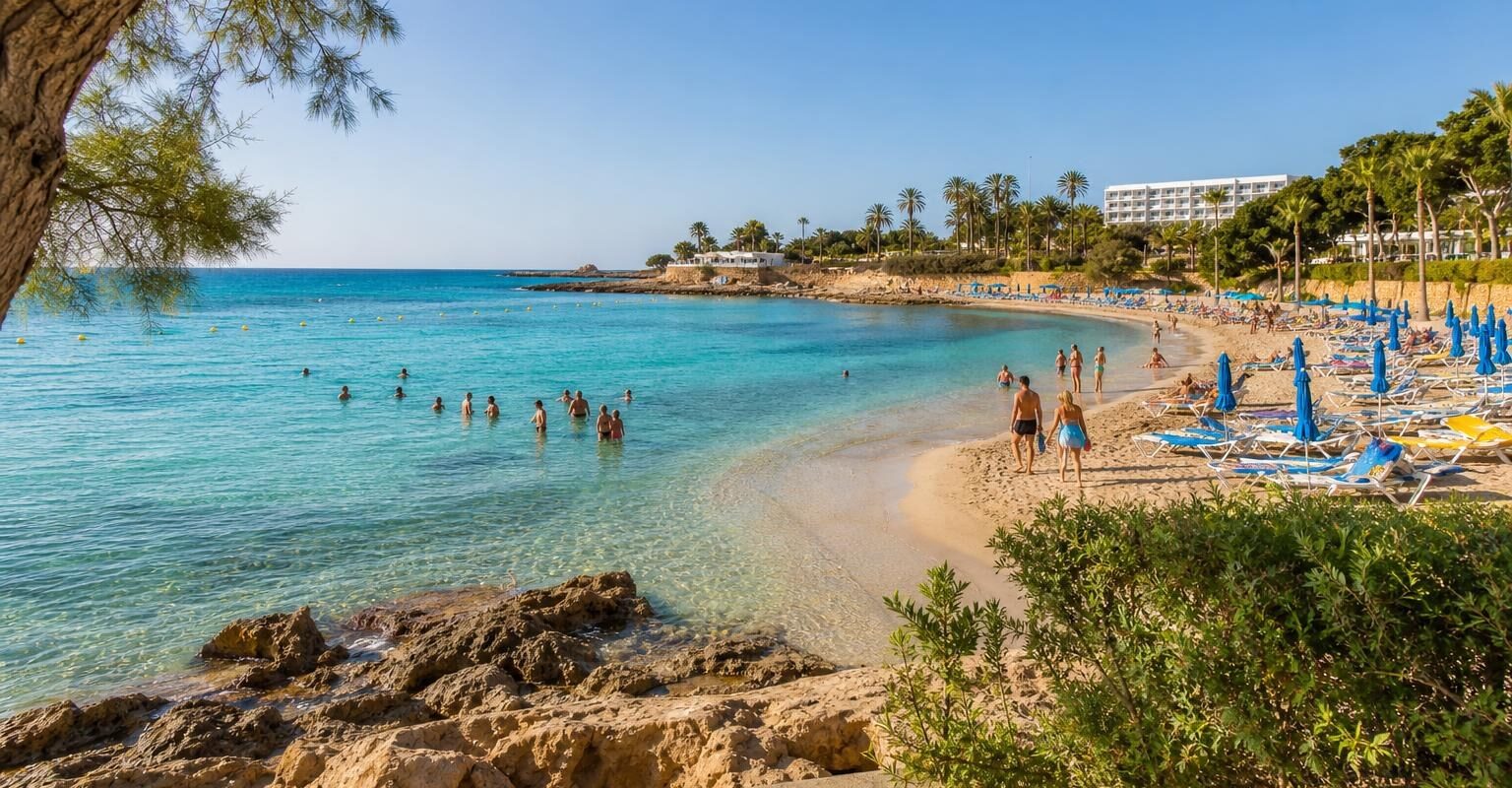
The beach owes its reputation to a combination of shallow turquoise water, fine golden sand, and a small rocky islet just offshore that you can wade or swim to. It’s been a Blue Flag holder for years, and Cyprus’s coastal water quality remains exceptional: all 123 monitored bathing sites across the island achieved a 100% “excellent” rating in the 2026 European Environment Agency report. That kind of consistency is rare anywhere in the Mediterranean.
Whether you’re travelling with young children, looking for decent snorkelling, or simply want a reliable beach day with proper facilities, Fig Tree Bay delivers. But it does get busy, and a few practical details can make the difference between a relaxed morning and a frustrating one.
An Overview of Fig Tree Bay: The Jewel of Protaras
Fig Tree Bay stretches roughly 500 metres along the coast of Protaras, a resort area within the municipality of Paralimni in the Famagusta district. The beach faces east, which means it catches the morning sun early and stays well-lit throughout the day. A gently sloping seabed extends about 30 to 40 metres from shore before the water reaches chest height on an adult, making it one of the safest swimming spots on the island for families.
The beach is well organised with rows of sunbeds and umbrellas, a handful of tavernas and snack bars along the promenade, and lifeguard coverage during the swimming season (typically May through October). Public toilets, showers, and wheelchair-accessible ramps are all in place.
What sets this beach apart from dozens of other attractive Cypriot coves is the combination of infrastructure and natural beauty. You get the convenience of a fully serviced beach without the feeling that the landscape has been paved over. The fig tree that gives the bay its name still stands near the shore, and the small islet offshore breaks up the horizon in a way that gives the bay real character.
Why Fig Tree Bay Cyprus is World-Renowned
The beach regularly appears on “best in Europe” lists published by travel organisations and tourism bodies. It holds Blue Flag status, which requires meeting strict criteria for water quality, environmental management, safety, and services. But the real draw is simpler than any award: the water is extraordinarily clear, the sand is soft, and the setting looks like a postcard without heavy editing.
The Legend of the Lone Fig Tree
A solitary fig tree once grew right at the edge of the sand, and local lore says it’s been there for centuries. The tree became so associated with the bay that it eventually gave the beach its name. Today a fig tree still stands in roughly the same spot, though whether it’s the original or a descendant is a matter of friendly debate among locals. Either way, it’s become a recognisable landmark and a popular photo spot, especially in the late afternoon when the light softens.
The Islet and Crystal Clear Shallows
About 100 metres offshore, a small rocky islet rises from the water. At low tide and in calm conditions, the water between the beach and the islet can be shallow enough to wade across, though most visitors prefer to swim. The islet is covered in scrubby vegetation and offers a fun destination for confident swimmers and snorkellers.
The clarity of the water here is remarkable. Visibility regularly exceeds 10 metres, and on still mornings you can see the sandy bottom from the shore with no difficulty. This clarity is partly down to the sandy seabed (no muddy sediment to stir up) and partly to the generally calm conditions on this east-facing stretch of coast, which is sheltered from the prevailing westerly winds.
Getting to Protaras Beach by Car
Protaras doesn’t have its own airport, so most visitors fly into Larnaca International Airport and drive east. Having your own vehicle is the most practical way to reach Fig Tree Bay, especially if you want flexibility to explore nearby beaches, villages, and the Cape Greco National Forest Park.
Important: Driving from Larnaca and Ayia Napa
From Larnaca Airport, the drive to Fig Tree Bay takes roughly 50 to 60 minutes via the A3 motorway heading east, then the E306 coastal road. The total distance is about 65 km. Roads are well paved and clearly signposted, though GPS is still more reliable than trying to follow signs through the Paralimni roundabouts.
If you’re staying in Ayia Napa, the drive is much shorter: approximately 10 km east along the coastal road, taking around 15 minutes outside of peak traffic.
Important: Most car rental agreements in Cyprus exclude off-road driving, so stick to paved roads. If you’re renting from a Republic of Cyprus provider, your insurance typically won’t cover travel into the northern part of the island. Keep this in mind if you’re planning any wider exploration.
The route from Larnaca is straightforward motorway driving for most of the journey. Once you exit the A3 and head toward Protaras, traffic can slow during July and August mornings as day-trippers converge on the coast. Arriving before 09:30 makes a noticeable difference to both traffic and parking.
Navigating Fig Tree Bay Parking Options
Parking is the single biggest source of frustration for visitors arriving by car, particularly in high season. The beach itself has no dedicated car park with large capacity, so you’ll be using a combination of the central Protaras lot and roadside spaces.
The central Protaras parking lot operates on a card-only payment system. The current rate is €3.00 for stays between 20 minutes and 3 hours, with an additional €0.50 charged per hour after that. Bring a debit or credit card, as cash isn’t accepted at the machines.
Here’s what to keep in mind:
- Peak season (July-August): The central lot fills by 10:00 on most days. Arrive early or expect to circle.
- Shoulder season (May-June, September-October): Parking is much easier. Spaces are usually available until midday.
- Street parking: Free roadside spaces exist on residential streets a 5 to 10 minute walk from the beach. These fill quickly too, but they’re worth checking.
- Hotel parking: If you’re staying at a Protaras hotel, ask whether they offer beach shuttle service. Several do during summer.
Tip: If you’re renting a car for your Cyprus trip, consider arriving at Fig Tree Bay early and spending the hottest part of the afternoon exploring Cape Greco or Paralimni town instead. You’ll avoid the worst of the parking pressure and the midday sun in one move.
Swimming Conditions and Water Sports
The swimming conditions at this Protaras beach are excellent for most of the year. The water is warm from late May through October, with peak temperatures in August typically reaching 28 to 29°C. Even in early October 2026, the sea temperature measured 27°C, which is above the historical average for the month and perfectly comfortable for swimming.
The east-facing orientation means the bay is sheltered from the prevailing winds that can make western beaches choppy. Waves are usually gentle, rarely exceeding 30 cm during summer. This makes it ideal for young children and less confident swimmers.
Water sports operators set up along the beach during summer, offering:
- Pedal boats and kayaks
- Stand-up paddleboards
- Jet ski hire (operated from designated zones away from swimmers)
- Parasailing
Lifeguards are on duty during the official bathing season, and the swimming area is marked with buoys to separate it from motorised watercraft.
Tip: Snorkelling Around the Rocky Islet
The rocky islet offshore is the best snorkelling spot in the immediate area. The rocks create small habitats for sea urchins, small wrasse, damselfish, and occasionally octopus. Bring your own mask and snorkel: rental options exist on the beach but tend to be overpriced and limited in sizing.
Swim out to the islet’s eastern side for the most interesting underwater terrain. The rocks drop off more steeply there, creating small overhangs where fish congregate. Water shoes are a good idea if you plan to climb onto the islet itself, as the rocks are rough and sea urchin spines are no joke.
Note: The municipality issued a public notice in September 2026 confirming a localised sewage issue was being resolved, emphasising their “safe-first” policy for beachgoers. Such incidents are rare but worth monitoring if you’re visiting during or just after infrastructure works. Check locally before swimming if you see any advisory signs posted.
The Best Time to Visit for Perfect Weather
The best months for a Fig Tree Bay visit are May, June, September, and early October. You get warm weather, swimmable seas, and significantly fewer people than the July-August peak.
Here’s a seasonal breakdown:
| Period | Air Temp (°C) | Sea Temp (°C) | Crowds | Parking Ease |
|---|---|---|---|---|
| May | 25-28 | 21-23 | Low-moderate | Easy |
| June | 28-32 | 24-26 | Moderate | Moderate |
| July | 32-36 | 27-28 | Very high | Difficult |
| August | 33-37 | 28-29 | Peak | Very difficult |
| September | 30-33 | 27-28 | Moderate | Moderate |
| October | 25-28 | 25-27 | Low | Easy |
July and August bring the hottest weather and the largest crowds. If you don’t mind the heat (and it can be genuinely intense, with occasional days above 40°C), these months offer the warmest water. But you’ll share the beach with thousands of other visitors, and parking becomes a real challenge.
September is arguably the sweet spot. The sea is still warm from months of summer sun, the air temperature drops to a more comfortable range, and tourist numbers thin out noticeably after European school holidays end. Early October extends this window: sea temperatures remain well above 25°C, and you can often find stretches of sand to yourself in the mornings.
Beach Amenities: Sunbeds, Accessibility and Food
Fig Tree Bay is a fully serviced beach with regulated facilities. For the 2026 summer season, sunbed hire is set at €2.50 per bed and €2.50 per umbrella. You’re not obliged to rent one: there’s ample free sand if you bring your own towel, though the prime spots close to the water fill up fast in summer.
Accessibility is good by Cypriot beach standards. Paved walkways lead down to the sand, and there are wheelchair-accessible ramps to the water’s edge. Accessible changing facilities and toilets are available near the main entrance.
Food options line the promenade behind the beach. You’ll find everything from full-service tavernas serving grilled halloumi and fresh fish to kiosks selling ice cream and cold drinks. Prices are typical for a popular tourist beach: not cheap, but not outrageous either. A basic lunch for two with drinks will run to roughly €25-35 at a beachfront spot.
For a more affordable option, pick up supplies from one of the supermarkets in Paralimni (a 10-minute drive) and bring a cool bag. There’s no restriction on bringing your own food and drinks to the public areas of the beach.
Quieter Alternatives Near Fig Tree Bay Protaras
If the main beach is too crowded for your taste, or you simply want variety across a multi-day stay, several excellent alternatives sit within a short drive.
Sunrise Beach (also called Flamingo Beach) is about 1 km north of Fig Tree Bay along the coastal path. It’s slightly less developed and tends to draw fewer visitors, though it still has sunbed hire and a couple of restaurants.
Green Bay, roughly 2 km south, is a smaller cove with a rockier shoreline that appeals to snorkellers. Parking is easier here, and the atmosphere is noticeably quieter even in August.
Pernera Beach, about 3 km north, is a local favourite with a more residential feel. It’s a good option if you want a beach day without the tourist-resort atmosphere.
Note: Finding Seclusion at Konnos Bay
Konnos Bay sits about 6 km south of Protaras, tucked into the cliffs at the edge of Cape Greco National Forest Park. It’s the most scenic beach in the area: a small crescent of sand framed by pine-covered hillsides and clear deep water.
The trade-off is access. The road down to Konnos is steep and winding, and the car park is small. Arrive before 09:00 in summer or you’ll struggle to find a space. The beach itself is smaller and has fewer facilities than Fig Tree Bay, but the setting more than compensates. It’s an excellent half-day trip if you have a rental car and want to combine beach time with a walk through the Cape Greco trails.
Key Takeaway for a Stress-Free Visit
A good day at Fig Tree Bay comes down to three decisions: when you arrive, where you park, and how flexible you are with timing.
Get there early. Before 09:30 in summer, before 10:30 in the shoulder months. This solves both the parking problem and the sunbed scramble in one move. Use the central Protaras car park if you want convenience, but keep a card handy since it’s cashless only.
If you’re visiting in July or August, consider splitting your day. Spend the morning at the beach, then drive to Cape Greco, a hillside village like Liopetri, or even back to your accommodation for a siesta during the 13:00-16:00 heat. Return to the beach in the late afternoon when the light is golden and half the crowd has left.
September and early October remain the best-kept timing advantage on this coast. Warm water, manageable crowds, and parking that doesn’t require military-grade planning. If your schedule allows any flexibility on dates, aim for this window.
Fig Tree Bay earns its reputation honestly. A little planning keeps the experience enjoyable rather than stressful, and having your own wheels through a local car hire gives you the freedom to explore the wider Protaras coastline at your own pace.
Frequently Asked Questions About Fig Tree Bay
Is Fig Tree Bay free to visit?
Yes, access to the beach is completely free. You only pay if you choose to hire sunbeds (€2.50 each) or umbrellas (€2.50 each) for the 2026 season. You’re welcome to lay your towel on the sand at no cost.
Can you walk to the islet from the beach?
In calm conditions when the water is at its shallowest, some people wade across. The water between the shore and the islet is typically waist to chest deep, so most visitors swim. Wear water shoes if you plan to walk on the rocky islet itself.
How much does parking cost near the beach?
The central Protaras car park charges €3.00 for stays up to 3 hours (card-only payment), with €0.50 per additional hour. Free roadside parking exists on surrounding streets but fills quickly during peak months.
Is Fig Tree Bay suitable for young children?
Very much so. The water is shallow for a considerable distance from shore, the seabed is sandy without sudden drop-offs, and lifeguards are present during the summer season. The gentle conditions and warm water make it one of the best family beaches in Cyprus.
What’s the water temperature like in September?
September sea temperatures at Fig Tree Bay typically range from 27 to 28°C, which is warmer than many Mediterranean beaches at the same time of year. Swimming remains comfortable well into October, when temperatures still hover around 25 to 27°C.