
Table of Contents
- Exploring Lefkara Village: A Jewel of Cypriot Heritage
- Planning Your Journey to Pano Lefkara
- The Art of Lefkara Lace and Silverware
- Cultural Landmarks and Historic Architecture
- Lefkara Christmas Village: A Festive Transformation
- Beyond the Village: Kato Drys and Choirokoitia
- Practical Tips for Your Visit
- Frequently Asked Questions About Lefkara
Perched at around 600 metres above sea level in the Troodos foothills, Lefkara is a village that has been shaping lace and silver for over five centuries. Its cobblestone lanes, limestone houses, and craft workshops draw visitors year-round, but the winter months add another layer: a full-scale Christmas village programme that transforms the settlement into one of Cyprus’s most atmospheric seasonal destinations. Whether you’re passing through on a day trip from Larnaca or building an entire itinerary around the Troodos region, this is a place where history and tradition are still very much alive.
Cyprus has been enjoying a sustained tourism boom: the island welcomed a record 4.53 million visitors in 2025, and 2026 looks set to continue that trajectory. Smaller villages like this one are benefiting, especially as travellers look beyond the coastal resorts for something more grounded.
Exploring Lefkara Village: A Jewel of Cypriot Heritage
The village is actually split into two settlements. Pano Lefkara (Upper Lefkara) is the main attraction: a compact, photogenic cluster of traditional houses with terracotta roofs and painted shutters. Kato Lefkara (Lower Lefkara) sits a short drive below and is quieter, with fewer shops but an equally authentic character.
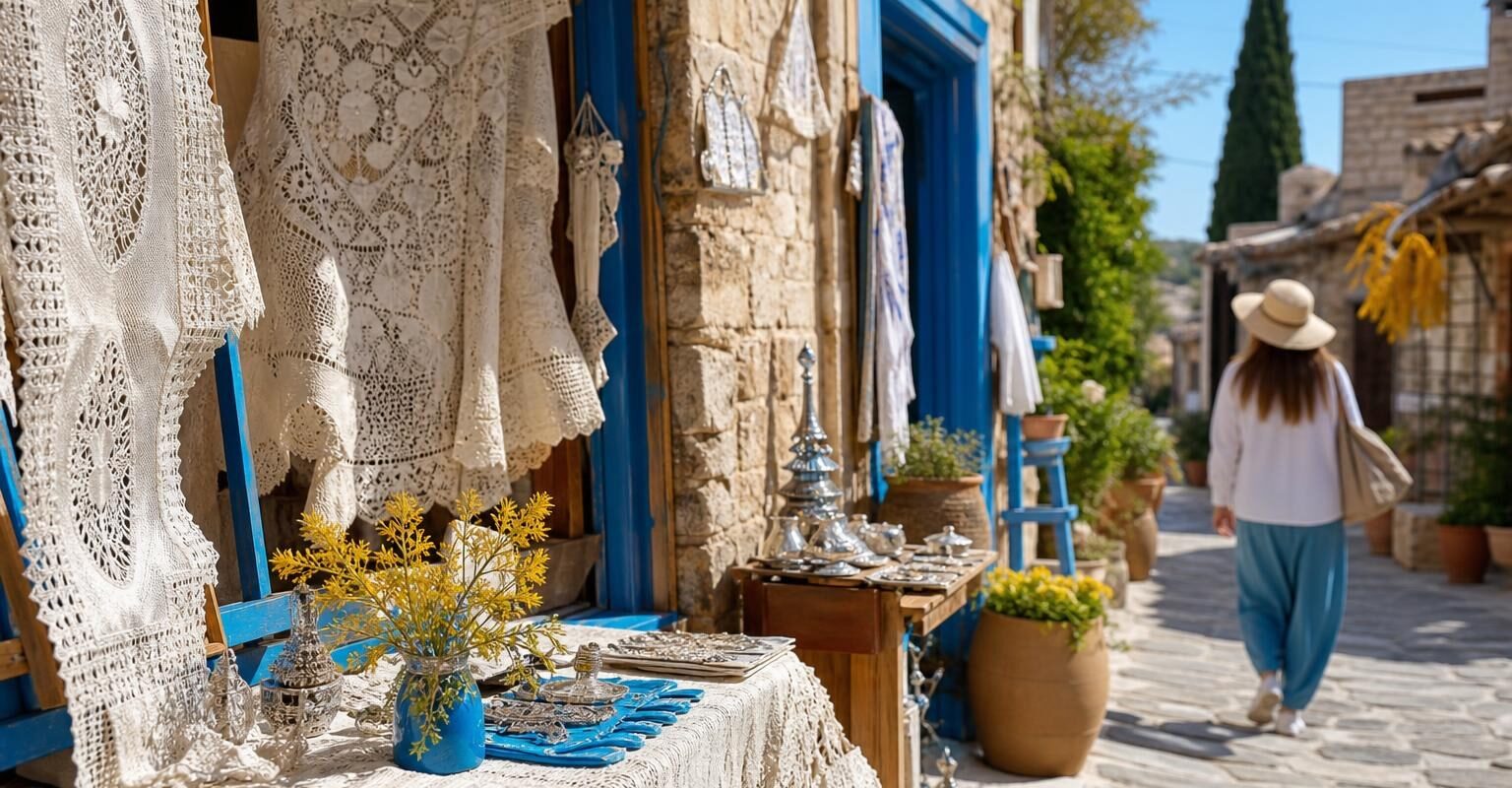
What sets Pano Lefkara apart from other Cypriot hill villages is the density of its craft tradition. Walk any street and you’ll pass workshops where women still embroider lace by hand and silversmiths shape jewellery using techniques passed down through generations. The village has been associated with these crafts since at least the Venetian period in the 15th century, and local legend holds that Leonardo da Vinci visited in 1481 and purchased a cloth to donate to Milan Cathedral.
The architecture itself tells a story. Ottoman-era houses with arched doorways sit alongside Venetian-influenced structures, and the narrow lanes were designed for foot traffic and donkeys, not cars. This makes the village a pleasure to explore on foot, though it also means parking is limited to designated areas on the periphery.
Tip: Visit on a weekday morning if you want to see artisans at work without the weekend crowds. Most workshops open by 09:00 and the light in the lanes is best before midday.
Planning Your Journey to Pano Lefkara
Lefkara sits roughly equidistant between Larnaca and Limassol, making it an easy day trip from either city. The roads are fully paved and well-signposted.
Getting there by car:
| Starting Point | Distance | Drive Time | Route |
|---|---|---|---|
| Larnaca (city centre) | ~40 km | 35-40 min | A5 motorway west, exit at Kofinou, follow signs north |
| Limassol (city centre) | ~50 km | 40-45 min | A1 motorway east, exit at Skarinou, follow signs north |
| Nicosia | ~65 km | 50-55 min | A1 south, then A5 east, exit at Kofinou |
| Paphos | ~130 km | 1 hr 30 min | A6 east to Limassol, then A1 east |
Parking is available in a free car park at the village entrance. Spaces fill up quickly on weekends and during the Christmas season, so arriving before 10:00 is wise. A second overflow area is sometimes opened during peak periods.
Important: Most car rental agreements in Cyprus exclude off-road driving, and insurance from the Republic of Cyprus typically does not cover travel to the north. The roads to Lefkara are all paved, so standard rental vehicles are perfectly fine. Having your own car is genuinely the most practical way to reach the village, as public transport connections are infrequent.
The drive itself is scenic, particularly the final stretch from the motorway up through the Troodos foothills. Expect some tight bends as you climb.
The Art of Lefkara Lace and Silverware
The twin crafts of lacemaking and silversmithing define the village’s identity. They’re not museum pieces here: they’re living traditions practised daily.
Lefkaritiko: UNESCO Intangible Heritage and How to Spot Authenticity
Lefkaritiko, the distinctive geometric lace of the village, was inscribed on UNESCO’s Representative List of the Intangible Cultural Heritage of Humanity in 2009. The technique involves a combination of drawn-thread work and embroidery on linen or cotton, producing intricate patterns that can take weeks or even months to complete for larger pieces.
Genuine lefkaritiko is handmade, and you can usually tell by looking at the back of the piece. Machine-made imitations have uniform, flat stitching on the reverse, while authentic handwork shows slight irregularities and visible thread ends. The patterns are also distinctive: traditional designs feature geometric motifs rather than floral ones, though some modern artisans have introduced contemporary variations.
Prices reflect the labour involved. A small doily might cost €20-€60, while a full tablecloth can run into the hundreds. If a price seems too good to be true, it probably is. The “Heartland of Legends” tourism route uses a Quality Label system to certify authentic local experiences, so look for this designation when shopping.
Note: Some shops sell imported lace alongside genuine lefkaritiko. Always ask the shopkeeper directly whether a piece is locally handmade, and don’t be shy about examining the stitching up close.
Mastering the Flame: The Village’s Silversmithing Tradition
Silverwork in Lefkara is less widely known than the lace but equally impressive. The craft arrived with the Venetians and has been practised continuously since. Local silversmiths produce jewellery, decorative items, and religious objects using traditional hand-forging techniques.
The workshops are worth visiting even if you don’t plan to buy. Watching a silversmith shape a piece from raw material is genuinely fascinating, and most artisans are happy to explain their process. Common items include filigree crosses, bracelets, and small decorative bowls.
Prices for silver pieces vary widely depending on weight and complexity. A simple pendant might start at €30, while elaborate filigree work can exceed €600. As with the lace, buying directly from the maker ensures authenticity and supports the local economy.
Cultural Landmarks and Historic Architecture
Beyond the craft workshops, the village holds several cultural sites worth your time. The architecture alone rewards a slow wander: look for the distinctive “anoikhti porta” (open door) tradition, where residents leave their doors open as a sign of hospitality.
The Church of Timios Stavros and the Local Museums
The Church of Timios Stavros (Holy Cross) is the village’s most significant religious building. Dating to the 14th century, it houses a silver cross said to contain a fragment of the True Cross. The church’s interior features medieval frescoes and an ornate iconostasis that reflects the village’s long prosperity.
Two small museums complement the church. The Local Museum of Traditional Embroidery and Silversmithing displays historical examples of both crafts, tracing their evolution over the centuries. The Patsalos Museum, housed in a restored traditional home, gives visitors a sense of daily life in the village during the 19th and early 20th centuries.
Opening hours for both museums can vary seasonally. Check locally or look for posted times at the village entrance. Entry fees are modest, typically a few euros per person.
The village’s mayor has been vocal about preserving local heritage. In late 2025, the mayor publicly challenged the Interior Ministry over the management of empty properties in the village, arguing they should be made available to support local families and artisans. It’s a reminder that behind the picturesque streets, real communities are working to sustain their way of life.
Lefkara Christmas Village: A Festive Transformation
Each winter, Pano Lefkara becomes one of Cyprus’s official Christmas villages, and the transformation is striking. The narrow lanes are draped in lights, workshops stay open late, and the stone buildings provide a backdrop that feels closer to a European alpine village than a Mediterranean island.
Seasonal Markets, Light Displays, and Local Loukoumi
The Lefkara Christmas village programme typically runs from late November through early January. During the early weeks, activities operate on a weekend-only schedule, usually Fridays through Sundays. After around 21 December, the programme shifts to daily operations through the holiday period. Exact dates and hours for the 2026-27 season should be confirmed closer to the time, as they’re announced annually.
The markets feature local crafts, seasonal foods, and handmade gifts. Loukoumi, the Cypriot version of Turkish delight, is a particular speciality here: Lefkara’s loukoumi is made with rosewater and has a softer, more fragrant texture than mass-produced versions. Several shops sell it year-round, but the Christmas markets offer the chance to sample before buying.
Expect live music, carol singing, and activities for children, including craft workshops and visits from Agios Vasilis (the Cypriot Santa Claus). The light displays are genuinely impressive against the stone architecture, and the cooler mountain air at 600 metres adds to the wintry atmosphere: evening temperatures in December typically hover around 6-10°C.
- Dress warmly for evening visits, as the altitude makes it noticeably cooler than the coast
- Parking fills up fast during Christmas weekends: arrive early or consider a weekday visit
- Several tavernas in the village serve seasonal dishes, including souvla and halloumi-based starters
- The programme is free to attend, though individual stalls and activities may charge
Pro Tip: If you’re visiting during the Christmas season, combine the trip with a stop at another nearby Christmas village. Several communities across the Troodos foothills run their own programmes, and a self-drive loop makes it easy to visit two or three in a single day.
Beyond the Village: Kato Drys and Choirokoitia
Two worthwhile detours sit within a short drive of Lefkara, and both pair well with a visit to the village.
Kato Drys is a tiny hamlet about 5 km east, reachable in under 10 minutes by car. It’s known for its bee museum, honey production, and traditional stone architecture. The village is exceptionally quiet, even by rural Cyprus standards, and makes a good contrast to the relative bustle of Pano Lefkara. Local honey and carob products are worth picking up.
Choirokoitia (Khirokitia) lies about 12 km south, back towards the motorway. This Neolithic settlement is a UNESCO World Heritage Site and one of the most important prehistoric sites in the eastern Mediterranean. The reconstructed round houses give a vivid sense of life on the island around 7000 BC. The site is well-maintained with informative signage, and a visit takes roughly 45 minutes to an hour.
Both sites are on paved roads and easily accessible in a standard rental car. Together with Lefkara, they make a full and varied day trip from either Larnaca or Limassol.
Practical Tips for Your Visit
A few logistics to keep in mind before you set off:
- The best months for visiting are spring (March-May) and autumn (September-November), when temperatures are comfortable for walking and the village isn’t overcrowded. Summer visits are fine but can be hot, even at altitude.
- Bring comfortable walking shoes. The cobblestones are uneven and some lanes are steep.
- Cash is useful for smaller workshops and market stalls, though most established shops accept cards.
- Water and sun protection are essential in summer. There are no large shops in the village, so bring supplies or buy from the small kiosks.
- Mobile signal is generally good, but data speeds can be patchy in the narrower lanes.
| Season | Temperature Range | Crowd Level | Notes |
|---|---|---|---|
| Spring (Mar-May) | 15-25°C | Moderate | Wildflowers, ideal walking weather |
| Summer (Jun-Aug) | 28-36°C | High | Hot but cooler than coast; mornings best |
| Autumn (Sep-Nov) | 18-28°C | Low-Moderate | Pleasant, grape harvest season nearby |
| Winter (Dec-Feb) | 5-14°C | High (Christmas) / Low (Jan-Feb) | Christmas village; bring warm layers |
Warning: The road from the motorway to Lefkara includes several sharp bends with limited visibility. Drive cautiously, especially in wet weather or after dark. Speed limits are clearly posted but easy to exceed on the downhill stretches.
If you’re renting a car through a service like CyprusCarRental, the drive to Lefkara is straightforward from any major city. Just remember that Cyprus drives on the left, and the blood alcohol limit is strict at 0.05%.
Frequently Asked Questions About Lefkara
Is Lefkara worth visiting for a day trip?
Absolutely. The village is compact enough to explore thoroughly in three to four hours, and the drive from Larnaca or Limassol takes under 45 minutes. Add Choirokoitia or Kato Drys to fill a full day.
How do I know if the lace I’m buying is genuine?
Check the back of the piece for slight irregularities in stitching, which indicate handwork. Ask the seller directly whether it’s locally made. Look for the Quality Label certification, and be wary of prices that seem unusually low for the size of the piece.
When does the Christmas village operate in 2026?
Dates are typically announced in autumn each year. Based on previous seasons, expect the programme to begin in late November on a weekend-only basis, shifting to daily operations around 21 December and running through early January. Check local announcements for confirmed 2026-27 dates.
Is there public transport to Lefkara?
Limited bus services run from Larnaca, but they’re infrequent and don’t always align well with visiting hours. A rental car or taxi is far more practical, especially if you want to combine the trip with other nearby sites.
Can I visit the workshops and watch artisans at work?
Yes. Most lace and silver workshops welcome visitors and are happy to demonstrate their craft. Weekday mornings offer the best chance of seeing artisans at work without interruption.
The village rewards those who slow down and pay attention. A piece of handmade lace, a silver cross, a bag of rosewater loukoumi: these are the kind of souvenirs that actually mean something. Plan your route, give yourself a full morning or afternoon, and let this remarkable Troodos village make its own case.