
Table of Contents
- The Festive Atmosphere of Christmas in Cyprus
- Exploring the Best Cyprus Christmas Markets
- Getting to the Christmas Villages by Car
- Traditional Cypriot Christmas Customs and Food
- Practical Guide: What is Open on December 25
- Dining Out and Hotel Events for Christmas Day
- Celebrating New Year in Cyprus
- Essential Tips for a Winter Visit
- Epiphany and the End of the Festive Season
- Frequently Asked Questions
Cyprus celebrates Christmas with a warmth that catches many first-time winter visitors off guard. Mild coastal temperatures hovering around 15-18°C, decorated village squares, and a calendar packed with markets and festivals make the island a genuine alternative to northern European cold-weather breaks. Winter air traffic to Cyprus rose by 16% during the 2025-2026 season, a clear sign that the secret is getting out. If you’re wondering what the festive season actually looks like on the ground, here’s what to expect: where to find the best markets, which traditions you’ll encounter, and what’s open (or closed) when December 25 rolls around.
The Festive Atmosphere of Christmas in Cyprus
The Cypriot festive season starts earlier than many visitors expect. Town councils begin stringing lights across main squares and seafront promenades in mid-November, and by late November the island’s official Christmas Villages are already open. The government has backed this seasonal push with infrastructure grants of up to €35,000 for municipalities and €70,000 for local councils, funding that goes directly into decorations, craft stalls, and programmes promoting regional food and drink.
What sets a Cypriot Christmas apart from its northern European counterparts is the climate. You won’t find snow at sea level, but the Troodos Mountains above 1,400 metres can see dustings from December through February. Coastal cities stay pleasant enough for afternoon walks along the promenade, while mountain villages offer a cooler, more traditionally “wintry” atmosphere with log fires and stone-built squares.
The Orthodox and Western Christmas traditions blend here in interesting ways. Most Greek Cypriots follow the Orthodox calendar but celebrate Christmas on December 25 rather than January 7, making the island’s festivities align with the rest of Western Europe. Churches hold midnight services on Christmas Eve, carollers (known as kalandistes) go door to door, and families gather for long meals that stretch well into the afternoon.
Exploring the Best Cyprus Christmas Markets
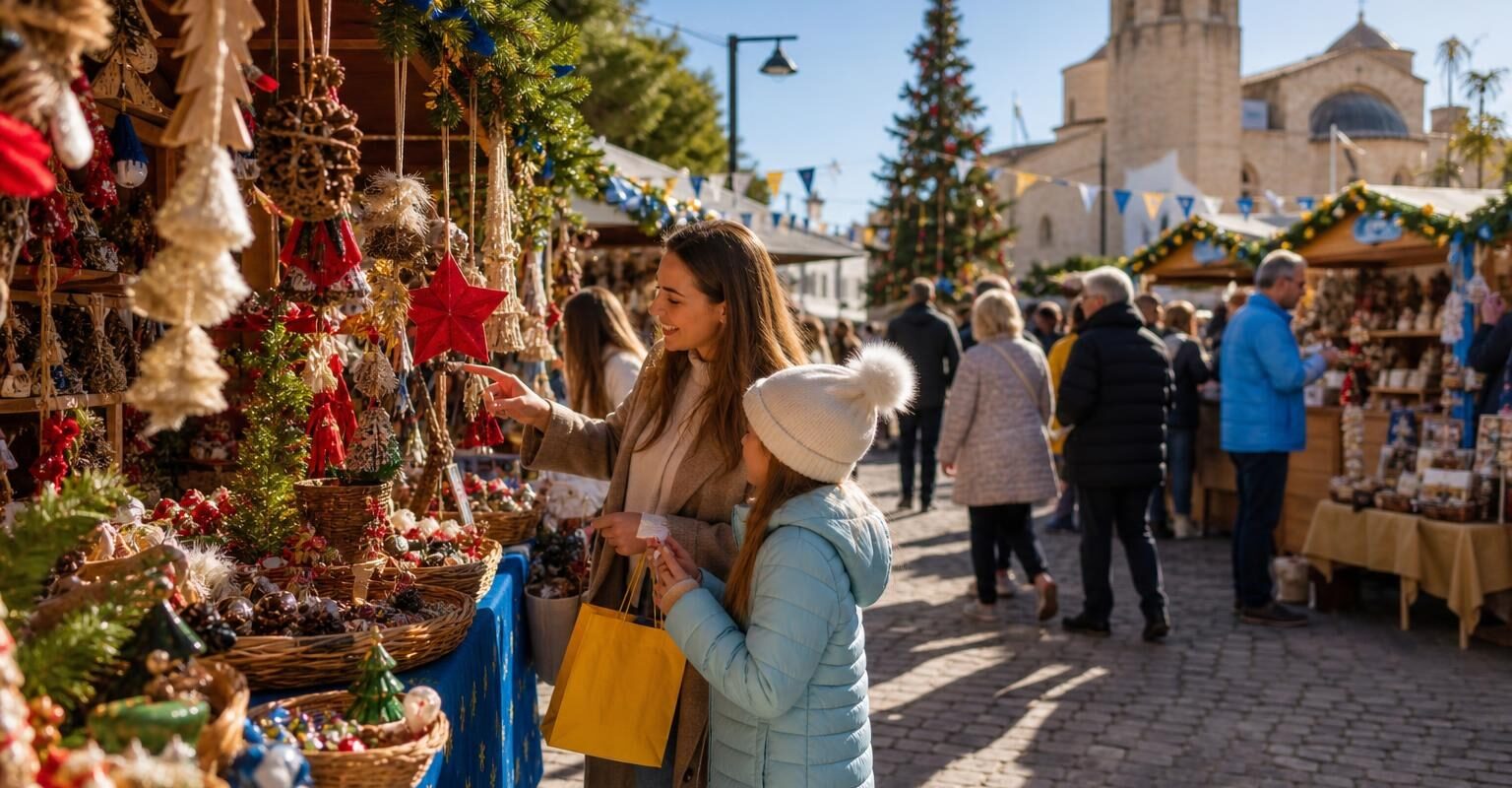
Christmas markets have grown into a genuine draw for winter visitors. Each major city runs its own version, typically from late November through early January, though exact dates shift year to year. Check locally before planning a trip around a specific market, as opening days and hours can change at short notice.
Limassol Christmas Market: A Seaside Wonderland
The Limassol Christmas market is the island’s largest and most established. It typically occupies the old port area and Molos seafront, where wooden chalets sell handmade ornaments, Cypriot sweets, and local wines. Live music stages, a small ice rink, and a Ferris wheel give it a proper fairground feel.
Limassol’s mild December evenings, rarely dropping below 12°C, mean you can browse the stalls in a light jacket. Street food vendors serve loukoumades (honey-fried dough balls) and souvlaki alongside mulled wine and hot chocolate. The market usually runs weekends from late November and daily from mid-December through January 6.
Larnaca Christmas Market: Coastal Festivities
The Larnaca Christmas market centres on Finikoudes promenade, the palm-lined waterfront that defines the city. It’s smaller than Limassol’s but has a more relaxed character, with craft workshops for children, a nativity scene near the Church of Saint Lazarus, and local producers selling halloumi, carob syrup, and commandaria wine.
Larnaca’s proximity to the island’s main airport makes it a convenient first stop. If you pick up a rental car at Larnaca Airport, the promenade is a ten-minute drive south. Parking near Finikoudes can be tight on weekends, so arrive before 5 pm or use the municipal car parks a block inland.
Nicosia and the Christmas Villages
Nicosia’s festive programme tends to focus on Ledra Street and the surrounding old town, where the capital’s divided character adds a unique backdrop to the holiday lights. Expect smaller, more community-driven events: carol concerts in courtyards, pop-up galleries, and food markets featuring Cypriot pastries.
The real stars of a Cypriot Christmas, though, are the official Christmas Villages. For the 2026-2027 season, the Deputy Ministry of Tourism has designated nine villages across the island: Agros, Deryneia, Kakopetria, Kalopanagiotis, Kyperounta, Lefkara, Lofou, Statos-Ayios Fotios, and Fikardou. They operate from November 21, 2026, to January 6, 2027. Specific locations like Fikardou and Agros have previously attracted over 200,000 visitors each, so these aren’t small affairs: expect live nativity scenes, artisan workshops, and tastings of local produce.
Getting to the Christmas Villages by Car
Most of the nine designated Christmas Villages sit in the Troodos Mountains or the foothills, so a car is the most practical way to reach them. Public bus services to mountain villages are infrequent and often don’t run on Sundays or public holidays.
Here’s a quick reference for driving from Limassol, the most central coastal city:
| Village | Distance from Limassol | Drive Time | Road Condition |
|---|---|---|---|
| Kakopetria | 65 km | ~55 min | Paved, mountain curves |
| Kalopanagiotis | 80 km | ~70 min | Paved, narrow stretches |
| Agros | 55 km | ~50 min | Paved throughout |
| Lefkara | 40 km | ~35 min | Paved, well-signposted |
| Lofou | 30 km | ~25 min | Paved, easy drive |
| Kyperounta | 60 km | ~55 min | Paved, steep sections |
| Fikardou | 75 km | ~65 min | Paved, last 3 km narrow |
| Statos-Ayios Fotios | 55 km | ~50 min | Paved |
| Deryneia | 150 km | ~90 min | Motorway + local roads |
Important: If you’re visiting mountain villages above 1,200 metres in December or January, carry snow chains or check whether your rental agreement covers winter tyres. Most standard rental agreements exclude off-road driving, and insurance from Republic of Cyprus rental companies does not cover travel into the northern part of the island.
Parking is generally free in village squares, though Kakopetria and Lefkara can fill up on peak weekends. Arrive before midday if you want a spot close to the main square.
Traditional Cypriot Christmas Customs and Food
Christmas Eve is the emotional heart of the season. Families attend evening church services, and children go carolling through neighbourhoods singing “Kalanda,” traditional songs that announce the birth of Christ. Householders reward the singers with coins, sweets, or dried fruits.
The Christmas Day table is a serious affair. Roast lamb or pork is the centrepiece, often slow-cooked with potatoes, and accompanied by dishes like ravioles (small pasta parcels filled with halloumi and mint). Two sweets dominate every household:
- Kourabiedes: almond shortbread cookies dusted thickly with icing sugar, crumbly and rich
- Melomakarona: honey-soaked semolina cookies spiced with cinnamon and clove, topped with crushed walnuts
You’ll find both in every bakery and supermarket from early December, but the homemade versions served at family tables are worth seeking out if you’re invited. Commandaria, the island’s ancient sweet dessert wine, often accompanies these treats.
Note: If you’re sampling commandaria, zivania, or local wines at village festivals, don’t drink and drive. Use a designated driver, book a taxi back to your accommodation, or plan to stay overnight in the village.
Practical Guide: What is Open on December 25
December 25 and 26 are official public holidays in Cyprus, and closures are extensive. Here’s what to expect:
- Government offices, banks, and post offices: closed on both days
- Supermarkets and most retail shops: closed by law on December 25 and 26
- Pharmacies: a duty rota operates; check the local newspaper or ask your hotel for the nearest open pharmacy
- Petrol stations: most motorway stations stay open, but smaller village stations may close
- Car rental desks: airport desks at Larnaca and Paphos typically maintain limited hours on December 25; confirm with your provider in advance
- Public transport: very limited or suspended entirely
Pro Tip: Stock up on essentials by December 24. Most supermarkets close by early afternoon on Christmas Eve, and you won’t find them open again until December 27. Bakeries in tourist areas sometimes open briefly on Christmas morning, but don’t count on it.
December 24 itself is a normal working day, though many shops close by 3 pm. January 1 follows a similar pattern to December 25, with most businesses shut.
Dining Out and Hotel Events for Christmas Day
Restaurants in tourist areas don’t all shut down on December 25, but your options narrow considerably. Hotel restaurants are the most reliable bet, with many offering set Christmas Day menus that blend Cypriot and international dishes. Prices for these menus vary widely: expect to pay more than a standard meal, and always book ahead.
The Cyprus hotel industry has been increasingly staying open year-round rather than closing for winter, which means more properties now offer festive programmes including Christmas Eve dinners, live entertainment, and children’s activities. Four- and five-star hotels in Limassol, Paphos, and Ayia Napa are most likely to run full festive packages.
Independent restaurants in Limassol’s old town and Paphos harbour sometimes open on Christmas Day, but this changes year to year. Call ahead or check social media pages in the days before. Tavernas in mountain villages are less predictable: some open for the Christmas Village programme, others close for family celebrations.
Celebrating New Year in Cyprus
New Year’s Eve is arguably the bigger party night on the Cypriot calendar. While Christmas is a family-centred affair, December 31 brings public celebrations, fireworks, and late-night dining.
Vasilopita and the Luck of the Coin
On New Year’s Day, Cypriot families cut the Vasilopita, a cake baked with a coin hidden inside. The tradition honours Saint Basil (Agios Vasilis), who in the Greek Orthodox tradition is the figure associated with gift-giving on January 1 rather than December 25. Whoever finds the coin in their slice is said to have good luck for the year ahead. Bakeries across the island sell Vasilopita throughout late December.
New Year’s Eve Parties and Fireworks
Limassol and Paphos host the largest public New Year’s Eve countdowns. Limassol’s seafront typically features a free outdoor concert with fireworks at midnight, drawing thousands to the Molos area. Paphos harbour runs a similar event on a smaller scale. Hotels and restaurants across the island offer gala dinners, often with live music and dancing.
Larnaca and Ayia Napa also hold public celebrations, though Ayia Napa’s winter crowd is much thinner than its summer peak. If you’re renting a car through a provider like CyprusCarRental, plan your parking early on New Year’s Eve: seafront roads in Limassol close to traffic from around 8 pm.
Essential Tips for a Winter Visit
Cyprus in December and January is mild by northern European standards, but preparation still matters.
- Temperatures along the coast average 15-18°C during the day and can drop to 8-10°C at night
- The Troodos Mountains see temperatures near or below freezing above 1,400 metres, with occasional snowfall
- Rain is most frequent in December and January: pack a waterproof jacket
- Daylight hours are short: sunset comes around 4:45 pm in late December
- Travel insurance covering medical costs is strongly recommended for non-EU visitors
Weather Alert: Mountain roads, particularly the B9 to Troodos and the road to Prodromos, can be closed temporarily after heavy snowfall. Check conditions on the Cyprus Police website or call 1401 before heading uphill. Snow chains may be required and are available for purchase at petrol stations in foothill towns like Platres.
Driving in winter is straightforward on coastal motorways, but mountain routes demand more caution. Keep headlights on in tunnels (it’s a legal requirement), watch for sharp bends on single-lane village roads, and fill up on fuel before heading into remote areas.
Epiphany and the End of the Festive Season
The Cypriot festive season doesn’t end on January 1. Epiphany, celebrated on January 6, marks the official close. This is one of the most dramatic public events of the year: priests throw a wooden cross into the sea, and young men dive in to retrieve it. The swimmer who finds the cross is said to receive a blessing for the coming year.
The ceremony takes place at harbours and beaches across the island, with Paphos harbour and Larnaca’s Finikoudes beach among the most popular locations. It’s a genuinely moving spectacle, watched by large crowds despite the cool January water temperatures.
January 6 also marks the final day of the Christmas Villages programme. After Epiphany, the decorations come down, the stalls close, and Cyprus shifts into its quiet late-winter rhythm before spring tourism picks up in March.
Frequently Asked Questions
Is it warm enough to swim in Cyprus at Christmas?
Sea temperatures in late December hover around 18-19°C, which is cool but swimmable for those used to British waters. Most hotel pools are unheated and too cold for comfortable swimming. You’ll see locals on the beach, but few go in past their ankles.
Do I need a car to enjoy Christmas in Cyprus?
For the coastal cities and their markets, you can manage with taxis and limited public transport. But reaching the Christmas Villages in the Troodos Mountains is far easier with your own vehicle. Bus services to mountain areas are infrequent and often don’t operate on holidays.
Are Christmas Village events free to attend?
Yes, entry to the official Christmas Villages is free. Individual activities, food, and craft purchases cost extra, but there’s no admission charge for the villages themselves.
What currency does Cyprus use, and can I pay by card?
Cyprus uses the euro. Card payments are widely accepted in cities, hotels, and larger restaurants. Smaller village tavernas and market stalls may prefer cash, so carry some notes.
Is Cyprus a good destination for spending New Year’s Eve?
Absolutely. Limassol and Paphos both host free public countdowns with fireworks, and hotels across the island run gala dinners. The atmosphere is festive without being overwhelming, and you avoid the extreme cold of most European cities.
Christmas in Cyprus offers a rare combination: genuine cultural traditions, outdoor markets you can enjoy without thermal layers, and a landscape that shifts from sunny coastline to snow-dusted mountains within an hour’s drive. Book accommodation and Christmas Day dining early, stock up on supplies before December 24, and leave room in your schedule for at least one mountain village. The island’s festive season runs right through to Epiphany on January 6, giving you more than two weeks of celebrations to plan around.