
Table of Contents
- Exploring the Historic Heart of Kato Paphos
- Discovering Paphos Old Town and Local Culture
- Best Beaches and Coastal Spots Near Paphos
- Driving North: Akamas Peninsula and Avakas Gorge
- Essential Day Trips by Car from Paphos
- Mountain Escapes: Omodos Village and Kykkos Monastery
- Practical Guide to Driving and Parking in Paphos
- Frequently Asked Questions About Visiting Paphos
Paphos sits on Cyprus’s southwestern coast, where layers of myth and history meet turquoise water and rugged hiking trails. Whether you’re spending a long weekend in town or using it as a base for wider exploration, the list of things to do in Paphos is genuinely impressive: UNESCO ruins you can walk through before breakfast, sea-turtle nesting beaches, mountain monasteries, and wine villages reachable in under an hour by car. Cyprus recorded over 4.5 million tourist arrivals in 2025, and Paphos saw a 30% surge in visitor numbers that same year, so the region’s infrastructure and dining scene have kept pace. This guide breaks everything down by location: what’s walkable in town, what needs a short drive, and which full day trips deserve a tank of fuel and an early start.
Exploring the Historic Heart of Kato Paphos
Kato Paphos is the lower, coastal part of town where most of the major archaeological sites cluster within a surprisingly compact area. You can cover the harbour, the castle, and the Archaeological Park on foot in a single morning, though you’ll want to arrive early in summer: temperatures regularly exceed 35°C between June and September. The area connects directly to the tourist strip of hotels and restaurants, making it the natural starting point for any visit.
Paphos Archaeological Park and Ancient Mosaics
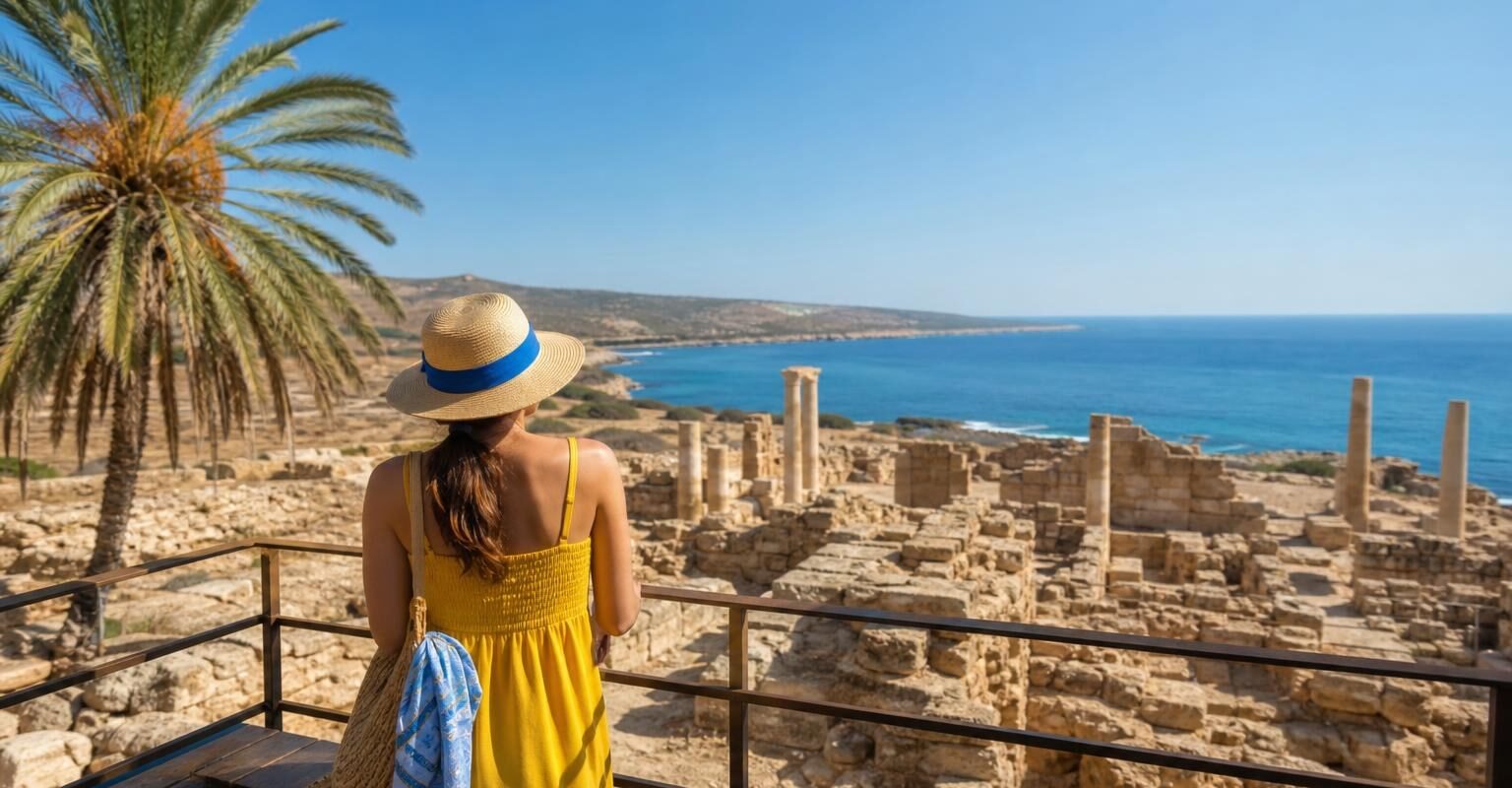
The Archaeological Park (also called the Kato Paphos Archaeological Site) is a UNESCO World Heritage Site spread across several hectares near the harbour. Its star attractions are the Roman-era floor mosaics in the Houses of Dionysos, Theseus, Aion, and Orpheus, dating from the 2nd to 5th centuries AD. The mosaics depict scenes from Greek mythology with striking colour and detail, and they’re among the finest in the eastern Mediterranean.
The site is an active dig. Polish archaeologists from the University of Warsaw uncovered one of the city’s oldest residential structures in early 2026, dated to around 117 BC using wine amphora fragments. Separately, excavations at nearby Fabrika Hill in June 2026 revealed a previously unknown Hellenistic defensive tower and a complex underground water management system. These ongoing discoveries mean the park changes year to year: check locally for any new sections that may have opened since your guidebook was printed.
Tip: Bring a hat, water, and comfortable shoes. There’s almost no shade inside the park, and the paths are uneven. Entry fees can change annually, so verify the current price at the ticket office or the Department of Antiquities website before visiting.
The Tombs of the Kings
About two kilometres north of the harbour, the Tombs of the Kings is a large underground necropolis carved from solid rock during the Hellenistic and Roman periods (3rd century BC onward). Despite the name, no royalty was actually buried here: the title comes from the sheer grandeur of the tombs, some of which feature Doric columns and open-air atriums.
The site is exposed and sprawling, so budget at least an hour. A few tombs are accessible via steep steps, and others can only be viewed from above. It’s particularly atmospheric in the late afternoon when the low sun catches the carved stone.
Paphos Harbour and Medieval Castle
Paphos harbour is the social centre of Kato Paphos: a small, photogenic port lined with fish restaurants and tour-boat operators. At the western end stands the Medieval Castle, a squat 13th-century fort rebuilt by the Ottomans in the 16th century. You can climb to the roof for a wide view over the harbour and coastline.
The harbour promenade fills up in the evenings, and it’s a good spot to end a day of sightseeing with grilled halloumi and a cold Keo beer. Fishing boats still use the harbour, and you’ll often see nets being mended on the quay in the mornings.
Discovering Paphos Old Town and Local Culture
Head uphill from Kato Paphos and you’ll reach Paphos Old Town (sometimes called Ktima), the administrative and commercial heart of the city. The atmosphere here is noticeably different from the tourist strip below: narrower streets, local bakeries, a covered market, and fewer souvenir shops.
The Municipal Market on Agora Street sells seasonal fruit, spices, Cypriot sweets, and local olive oil. Nearby, several small galleries and craft workshops occupy restored stone buildings. The Ethnographic Museum and the Byzantine Museum are both worth a stop if you’re interested in Cypriot folk art and religious iconography.
Paphos also launched a Generative AI Digital Assistant in 2026 as part of its Smart Tourism initiative, designed to help visitors build personalised itineraries. It’s available online and can suggest routes based on your interests and available time.
Note: Old Town shops and the market often close between 13:00 and 16:00, especially in summer. Plan your visit for the morning or late afternoon.
Best Beaches and Coastal Spots Near Paphos
The Paphos coastline is rockier than the long sandy stretches of Ayia Napa and Protaras on the east coast, but it still offers excellent swimming. The best sandy beaches lie a short drive north of the town centre.
Coral Bay and Laourou Beach
Coral Bay is the most popular beach near Paphos, roughly 12 km north of the harbour. It’s a wide, sandy crescent with shallow water, sunbed hire, and several tavernas directly behind the sand. Families favour it for the gentle entry and lifeguard presence in season.
Laourou Beach (sometimes called “Coral Bay 2”) sits just around the headland to the north. It’s quieter, slightly less developed, and backed by banana plantations. Both beaches have paid parking nearby: expect to pay a few euros in peak season.
Getting there by car: From Paphos harbour, take the B7 coast road north. The drive is about 15 minutes on well-paved road. Parking fills quickly on summer weekends, so arrive before 10:00.
Lara Beach and the Turtle Conservation Station
Lara Beach, on the western edge of the Akamas Peninsula, is one of the most important nesting sites for green and loggerhead sea turtles in the Mediterranean. The beach is undeveloped: no sunbeds, no bars, just sand and sea.
Access is via a rough dirt track from Agios Georgios. The last few kilometres are unpaved, and while a standard car can manage in dry conditions, progress is slow and bumpy.
Important: Most rental agreements in Cyprus exclude coverage for damage caused by off-road driving. If you plan to drive to Lara Beach, check your rental terms carefully. A high-clearance vehicle is recommended, especially after rain.
The turtle conservation station operates during nesting season (roughly June to October). Volunteers mark and protect nests with wire cages, and informational signs explain the conservation programme. Swimming is permitted, but you should avoid disturbing marked nest areas.
Driving North: Akamas Peninsula and Avakas Gorge
The Akamas Peninsula is the wild, undeveloped northwestern tip of Cyprus: a protected area of pine forest, coastal cliffs, and endemic plant species. It’s one of the best reasons to rent a car in Paphos and spend a full day exploring.
The main access point is the village of Agios Georgios or the Baths of Aphrodite car park on the northern side. From the Baths, two well-marked nature trails (the Aphrodite Trail and the Adonis Trail) loop through the hillside with views over Chrysochou Bay. Both are moderate hikes of 3-7 km.
Avakas Gorge, on the peninsula’s western side, is a dramatic limestone canyon with walls rising to 30 metres. The walk into the gorge follows a riverbed and takes about 30 minutes each way. Sturdy footwear is essential: the rocks are slippery, and you’ll wade through shallow water in places.
Getting there by car: From Paphos, drive north on the B7 to Agios Georgios (about 25 km, 30 minutes). For Avakas Gorge, follow signs from Agios Georgios: the last stretch is a dirt road (about 3 km). Parking is available at the trailhead.
The Akamas development plan was revised in August 2025 to minimise the human footprint, with road improvement works scheduled for Q4 2026. This means access roads may see temporary closures or diversions later in the year: check local updates before setting out.
Warning: There is no mobile signal in parts of the Akamas. Carry enough water (at least 2 litres per person in summer), let someone know your route, and don’t rely solely on your phone for navigation. Download offline maps before you leave Paphos.
Essential Day Trips by Car from Paphos
Having a car opens up a large portion of western and central Cyprus from Paphos. Below is a quick reference table for the most popular Paphos day trips, followed by detail on two standouts.
| Destination | Distance from Paphos | Drive Time | Road Condition |
|---|---|---|---|
| Aphrodite’s Rock (Petra tou Romiou) | 25 km east | 20 min | Paved motorway |
| Ancient Kourion | 65 km east | 45 min | Paved motorway |
| Omodos Village | 65 km northeast | 55 min | Paved mountain road |
| Kykkos Monastery | 100 km northeast | 1 hr 30 min | Paved mountain road |
| Troodos Square | 85 km northeast | 1 hr 15 min | Paved mountain road |
| Lara Beach | 30 km north | 45 min | Part unpaved |
Aphrodite’s Rock and Ancient Kourion
Aphrodite’s Rock (Petra tou Romiou) is the sea stack where, according to myth, the goddess Aphrodite rose from the foam. It’s a quick stop on the B6 motorway heading east toward Limassol. A car park and viewing area sit on the hillside above the beach. Swimming here is possible but the current can be strong, and the pebble beach shelves steeply.
Ancient Kourion, about 40 minutes further east, is a Greco-Roman city perched on a clifftop overlooking the sea. The restored amphitheatre still hosts performances in summer, and the House of Eustolios contains well-preserved mosaics. The site is large and fully exposed to the sun, so carry water and wear a hat.
Both sites have free or low-cost parking. You can comfortably visit both in a half-day trip, leaving time for lunch in a village along the way.
Mountain Escapes: Omodos Village and Kykkos Monastery
The Troodos Mountains offer a welcome change of temperature and scenery, especially in July and August when the coast bakes. Two destinations stand out for a day trip from Paphos: Omodos and Kykkos Monastery.
Omodos is a wine village about 55 minutes from Paphos, centred around the Monastery of the Holy Cross and a cobblestoned square. Several small wineries offer tastings of local varieties like Xynisteri and Maratheftiko. The village also produces traditional sweets and lace.
Pro Tip: If you’re tasting wine in Omodos, don’t drink and drive. Designate a driver, or consider staying overnight at one of the village guesthouses. Cyprus’s legal blood alcohol limit is 0.05%, and police checkpoints are common on mountain roads.
Kykkos Monastery, deeper into the Troodos range, is the wealthiest and most famous monastery in Cyprus. Its interior is covered in gilded mosaics and icons, and a museum on site displays ecclesiastical artefacts. The drive from Paphos takes about 90 minutes through pine-forested switchbacks, and it’s worth the effort for the architecture and the cooler mountain air (often 10°C below coastal temperatures).
Getting there by car: Take the B7 north from Paphos, then the E606 toward Stroumbi and into the mountains. Roads are fully paved but narrow and winding in places. Allow extra time if you’re not used to mountain driving.
Practical Guide to Driving and Parking in Paphos
Driving in Paphos is straightforward once you adjust to left-hand traffic (a legacy of British colonial rule). Roads in and around the town are well-maintained, and signage is in both Greek and English.
Parking in Kato Paphos can be tricky during peak season. The main pay-and-display car parks near the harbour and Archaeological Park fill by mid-morning in summer. Free street parking exists in the residential streets above Kato Paphos, but you’ll need to walk 10-15 minutes downhill. Old Town (Ktima) has more available parking, including a large free lot near the Municipal Market.
A few practical points to keep in mind:
- Speed limits are 50 km/h in town, 80 km/h on rural roads, and 100 km/h on the motorway.
- Headlights must be on in tunnels (there are a few on the Paphos-Limassol motorway).
- Seatbelts are mandatory for all passengers. Child seats are required for children under 150 cm.
- The legal blood alcohol limit is 0.05%.
- Rental insurance from Republic of Cyprus agencies does not cover driving in the northern part of the island.
- GPS navigation works well on main roads, but download offline maps for the Akamas and remote mountain areas where signal drops.
If you’re picking up a hire car at Paphos Airport, the drive into town is about 15 km on a good dual carriageway. Most rental desks are inside or adjacent to the terminal. CyprusCarRental can help you compare options before you arrive, so you’re not making decisions at the counter after a long flight.
Frequently Asked Questions About Visiting Paphos
How many days do you need in Paphos?
Three to four days is a good minimum. That gives you a full day for Kato Paphos and the archaeological sites, a day at the beach, and one or two day trips by car to the Akamas, Troodos, or Kourion. If you’re a keen hiker, you could easily fill a week.
Is it worth renting a car in Paphos?
Yes, if you want to see anything beyond the town centre. Beaches like Coral Bay and Lara, the Akamas Peninsula, and mountain villages are all much easier to reach with your own transport. Public buses serve some routes but are infrequent, especially outside summer.
What is the best time of year to visit Paphos?
April to June and September to October offer warm weather (25-30°C), manageable crowds, and lower accommodation prices. July and August are hot (often above 35°C) and busy. Winter is mild (15-18°C) and ideal for hiking, though some beach facilities close.
Is Paphos walkable?
Kato Paphos and the harbour area are walkable, and a seafront promenade connects many of the main sites. Old Town is uphill and about 2 km from the coast: manageable but steep in the heat. For anything outside the town centre, you’ll want a car or taxi.
Are the Paphos archaeological sites open year-round?
The Archaeological Park and Tombs of the Kings are open daily throughout the year, though hours vary by season (shorter in winter). Entry fees and exact opening times can change, so check with the Department of Antiquities or the ticket offices for 2026 details.
Paphos rewards the curious. The town itself packs genuine historical weight into a compact, walkable area, and having a car transforms a good city break into a proper exploration of western Cyprus. From the mosaics of Kato Paphos to the gorges of Akamas and the cool vineyards of the Troodos foothills, the range of Paphos attractions is hard to match anywhere else on the island. Start with the sights you can reach on foot, then fill the tank and head for the hills.