
Table of Contents
- Planning Your Drive to Kykkos Monastery
- Getting There by Car: Routes and Road Conditions
- Exploring the Kykkos Monastery Complex
- Throni Hill and the Tomb of Archbishop Makarios III
- Essential Visitor Information and Dress Code
- Beyond Kykkos: Nearby Troodos Monasteries and Villages
- Frequently Asked Questions about Kykkos Monastery
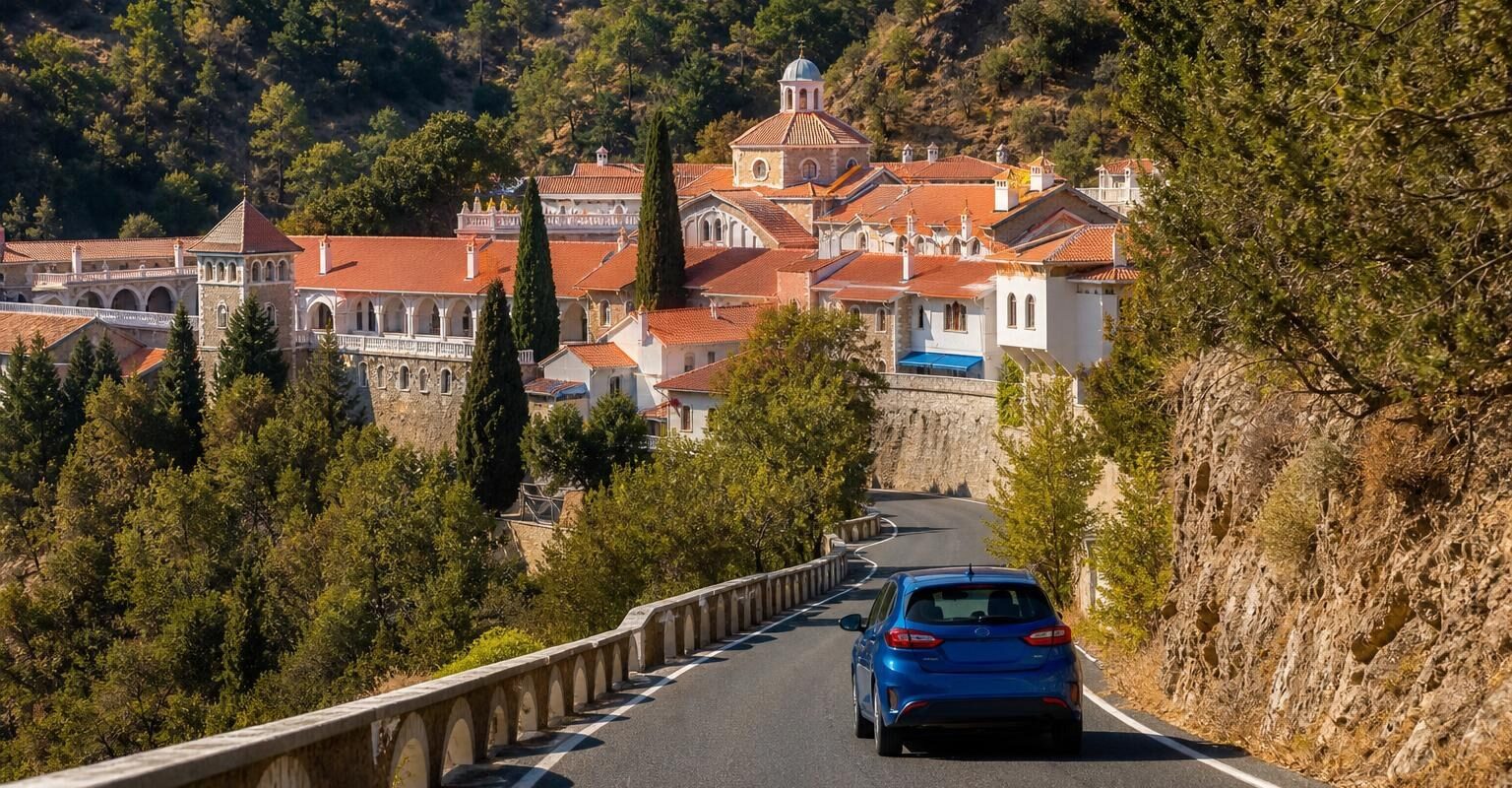
Perched at roughly 1,318 metres in the western Troodos Mountains, Kykkos Monastery is the wealthiest and most famous religious foundation on the island. Founded in the late 11th century, it draws pilgrims, history enthusiasts, and curious road-trippers year-round. Reaching it by car is half the experience: the mountain road climbs through pine forests, tight switchbacks, and villages that feel a world away from the coastal resorts. Whether you’re driving up from Paphos, Limassol, or Nicosia, the journey rewards you with some of the finest scenery Cyprus has to offer. This guide covers every practical detail you need: routes, road conditions, what to see inside the monastery complex, and worthwhile stops along the way.
Planning Your Drive to Kykkos Monastery
A visit to Kykkos demands a full day if you want to enjoy the drive and explore properly. The monastery sits in the remote northwest corner of the Troodos range, and no matter which coastal city you start from, you’re looking at roughly 90 minutes to two hours of mountain driving each way.
Fill your fuel tank before you leave the lowlands. Petrol stations thin out dramatically once you pass the last major town on your chosen route, and the nearest fuel stop to the monastery is in Pedoulas or Kaminaria, depending on your direction. Running low on a mountain road with no mobile signal is not the kind of adventure you want.
Pack water, snacks, and a light jacket even in summer: the altitude means temperatures can be 10-12°C cooler than the coast. If anyone in your group is prone to motion sickness, sit them in the front seat and keep the windows cracked. The switchbacks between Prodromos and the monastery are relentless.
Pro Tip: Start early. The monastery and its museum are best enjoyed in the morning before tour buses arrive from the coast. Aim to be on the road by 8:00 a.m. and you’ll have the complex largely to yourself by 10:00.
Renting a car is really the only practical way to visit at your own pace and combine the trip with nearby villages. A standard two-wheel-drive hatchback handles every paved route to the monastery comfortably, so there’s no need for a 4×4 unless you plan to explore forest tracks afterwards. Bear in mind that most rental agreements in Cyprus exclude unpaved or off-road driving, so stick to tarmac unless your contract says otherwise.
Getting There by Car: Routes and Road Conditions
Three main corridors connect the coast to the monastery. Each has a different character, and your choice depends on where you’re staying and what you’d like to see along the way.
Driving from Paphos and Limassol
From Paphos, the most direct route runs via the E606 to Stroumbi, then north through Pano Panayia (the birthplace of Archbishop Makarios III) and on through the Troodos forest roads. The total distance is around 70 km, but expect the drive to take close to 90 minutes because the road narrows and climbs steeply after Pano Panayia. Phase 1 of the new Paphos-Polis Chrysochous motorway, connecting Ayia Marinouda to Stroumbi, is moving forward in 2026, which should speed up the initial stretch.
From Limassol, head north on the B8 towards Troodos village, then follow signs west through Prodromos and on to the monastery. This route covers roughly 95 km and takes about two hours. The road from Prodromos is well-paved but winding, with sharp bends that demand patience and low gear.
| Starting Point | Distance (approx.) | Drive Time | Key Road |
|---|---|---|---|
| Paphos | 70 km | 1 h 30 min | E606 via Pano Panayia |
| Limassol | 95 km | 2 h | B8 via Troodos & Prodromos |
| Nicosia | 95 km | 1 h 45 min | New motorway via Evrychou |
The Route from Nicosia via the Marathasa Valley
Drivers coming from Nicosia now benefit from a major upgrade. The Astromeritis-Evrychou motorway, an 11.3-kilometre four-lane highway that opened on 30 April 2026, shaves significant time off the old two-lane road. This modern corridor even uses recycled asphalt materials in its construction, a first for Cyprus.
From Evrychou, continue west through the Marathasa Valley via Kalopanagiotis and Pedoulas. The valley road is scenic and reasonably wide, passing UNESCO-listed painted churches along the way. Total distance from Nicosia is about 95 km, and the new motorway brings the drive time down to roughly 1 hour 45 minutes in good conditions.
Winter Driving and Mountain Hazards
Snow falls on the Troodos peaks between December and March, and the road to Kykkos can be affected. Authorities sometimes require snow chains on the stretch between Prodromos and the monastery, and temporary closures happen during heavy snowfall.
Weather Alert: Check the Cyprus Police road conditions page or call 1499 before setting out on a winter morning. Conditions can change within hours at this altitude, and you don’t want to be caught without chains.
If you’re renting a car in winter, confirm whether the rental company provides snow chains and whether winter mountain driving is covered under your agreement. Black ice is a genuine risk on shaded bends early in the morning, so drive cautiously and keep your headlights on.
Exploring the Kykkos Monastery Complex
The monastery you see today is largely an 18th- and 19th-century reconstruction: fires destroyed the original medieval buildings multiple times. Despite that, the place carries a powerful sense of continuity. Monks have lived and worshipped here without interruption since Emperor Alexios I Komnenos funded its founding around 1080 AD.
The main courtyard is ringed by arched colonnades decorated with elaborate mosaics depicting biblical scenes and the monastery’s own history. These mosaics are relatively modern, added during 20th-century restorations, but their scale and detail are striking. Entry to the church and courtyard is free.
Wander the cloisters slowly. The bell tower, the old well house, and the abbot’s quarters all reward a closer look. The monastery is still an active religious community, so you’ll often see monks going about their daily routines.
The Golden Icon of the Virgin Mary
The monastery’s most revered possession is an icon of the Virgin Mary attributed to the Apostle Luke. It has been housed here since the monastery’s founding and is one of only three such icons said to have been painted by Luke himself.
You won’t actually see the icon’s face: it has been covered with a silver-gilt casing for centuries, and tradition holds that anyone who looks directly upon it will be struck blind. The casing itself is ornate and beautiful, and the icon sits in a special shrine to the left of the main altar. Regardless of your religious beliefs, the atmosphere around the shrine is genuinely affecting: quiet, candlelit, and heavy with centuries of devotion.
The Monastery Museum and Ecclesiastical Treasures
A separate building houses the monastery museum, which holds one of the finest collections of religious art in Cyprus. The museum’s entire collection has been comprehensively digitised, making it one of the most thoroughly documented ecclesiastical collections on the island.
Exhibits span centuries and include Byzantine manuscripts, antique maps, vestments embroidered with gold thread, wood carvings, and a remarkable collection of icons from various periods. The display is well-organised across several halls, with clear English-language labels throughout.
The museum entrance fee is €5.00 for individual visitors and €3.00 for groups (2026 prices). Entry to the monastery church itself remains free. Opening hours can vary seasonally, so check locally before you plan your day around a specific time.
Throni Hill and the Tomb of Archbishop Makarios III
About 3 km west of the monastery lies Throni, a hilltop site of deep significance to modern Cypriot identity. Archbishop Makarios III, the first President of the Republic of Cyprus, served as a novice at Kykkos before his political career. After his death in 1977, he was buried here according to his wishes.
The drive from the monastery car park to Throni takes about five minutes along a paved forest road. A large mosaic-covered structure marks the tomb, and a monumental bronze statue of Makarios stands nearby. The hilltop offers panoramic views across the western Troodos range: on a clear day, you can see all the way to the Paphos coastline.
The site is free to visit and open during daylight hours. It’s a quiet, contemplative spot, and most visitors spend 20-30 minutes here. The combination of political history and mountain scenery makes Throni a worthwhile stop, even if you’re not particularly interested in Cypriot politics.
Note: The road to Throni is paved and suitable for any car. Don’t be put off by its remote appearance on the map: it’s a short, easy drive from the monastery.
Essential Visitor Information and Dress Code
Kykkos is an active monastery, and the dress code is strictly enforced. Both men and women must cover their shoulders and knees. Women are sometimes asked to cover their heads inside the church, though this isn’t always enforced. Wraps are available at the entrance for those who arrive unprepared, but bringing your own light scarf or shawl is more comfortable.
Here’s a quick reference for planning your visit:
| Detail | Information |
|---|---|
| Church entry | Free |
| Museum entry | €5.00 adults / €3.00 groups (2026) |
| Dress code | Shoulders and knees covered; no shorts or sleeveless tops in the church |
| Photography | Allowed in the courtyard; prohibited inside the church |
| Parking | Large free car park at the main entrance |
| Facilities | Café, gift shop, public toilets |
| Altitude | ~1,318 m |
Photography is forbidden inside the church but permitted freely in the courtyard and around the exterior mosaics. The gift shop sells local products including monastery honey, wine, and zivania. If you pick up a bottle, remember the legal blood alcohol limit for driving in Cyprus is 0.05%: if you’re the driver, save the tasting for the evening.
Beyond Kykkos: Nearby Troodos Monasteries and Villages
The western Troodos range holds a concentration of historic monasteries and painted churches that few other regions in Europe can match. If you’ve driven all the way up to Kykkos, it makes sense to build in a few extra stops on the return journey.
The Marathasa Valley, which you’ll pass through if you’re heading towards Nicosia, contains several UNESCO World Heritage churches. These tiny stone buildings hide astonishing Byzantine frescoes, some dating back to the 12th century. The churches at Moutoullas and Kalopanagiotis are the most accessible by car, with small car parks nearby.
Stopping in Pedoulas and Kalopanagiotis
Pedoulas sits at around 1,100 metres and makes an excellent lunch stop. The village is known for its cherry orchards (spectacular in April), its spring water, and the Church of Archangelos Michael, which contains 15th-century frescoes and is a UNESCO-listed site. Several tavernas serve hearty mountain food: grilled halloumi, slow-cooked lamb, and fresh trout are common on menus.
Kalopanagiotis, a few kilometres further down the valley, clusters around a steep ravine with sulphur springs. The Monastery of Agios Ioannis Lampadistis here is another UNESCO site, housing three churches under one roof with frescoes spanning from the 13th to the 15th centuries. The village itself has been carefully restored, with a handful of boutique guesthouses for those who want to spend a night in the mountains.
Both villages have free parking and are on paved roads suitable for any rental car. Budget about 30-45 minutes for each stop if you want to see the churches and grab a coffee.
Frequently Asked Questions about Kykkos Monastery
How long does a visit to Kykkos Monastery take?
Allow at least 1.5 to 2 hours for the monastery complex and museum. Add another 30 minutes if you drive to Throni. With the mountain drive factored in, a round trip from any coastal city takes a full day.
Is Kykkos Monastery open every day?
The monastery is open daily year-round, though the museum may have reduced hours in winter. Specific opening times can shift, so it’s wise to check locally or call ahead, particularly if you’re visiting between November and March.
Can I visit Kykkos Monastery without a car?
Organised coach tours run from Paphos, Limassol, and Larnaca, but they follow fixed schedules and don’t allow you to linger or explore nearby villages. A rental car gives you far more flexibility, especially if you want to combine the visit with stops in Pedoulas or Kalopanagiotis.
Is the road to Kykkos Monastery dangerous?
The road is fully paved and well-maintained, but it’s narrow and winding with sharp bends and steep drops in places. Drive at a moderate speed, use your horn on blind corners, and watch for oncoming traffic drifting across the centre line. In winter, snow and ice can make conditions challenging above 1,200 metres.
Do I need to pay to enter the monastery?
Entry to the monastery church and courtyard is free. The museum charges €5.00 for adults and €3.00 for group visitors as of 2026.
The drive to Kykkos is one of those rare journeys where the road itself justifies the trip. Pine-scented air, mountain light, and switchbacks that keep you fully engaged behind the wheel: it’s the antidote to a week on the beach. The monastery rewards you at the top with genuine history, remarkable art, and a stillness you won’t find on the coast. Pair it with a stop in the Marathasa Valley and you’ve got what is arguably the best single day trip you can do by car in Cyprus. Fill the tank, pack a jacket, and give yourself the whole day.